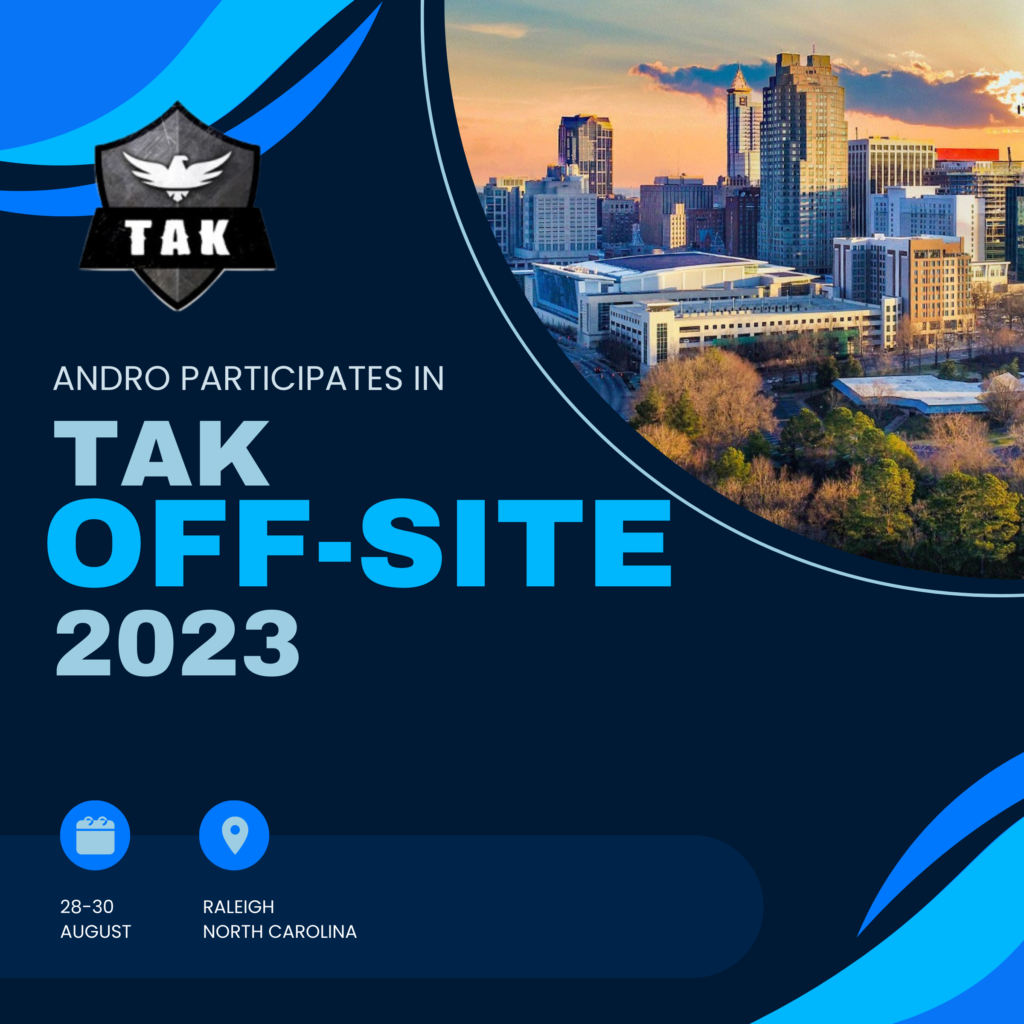
On August 28-30, ANDRO Computational Solutions participated in the 2023 Tactical Assault Kit / Team Awareness Kit (TAK) Offsite 2023 meeting sponsored by the TAK Configuration Steering Board (CSB). ANDRO was part of an elite set of teams demonstrating the latest in TAK technologies during an outstanding 3-day event held in Raleigh, NC. The event gave ANDRO an opportunity to present and demonstrate its PRISMTAK edge-based solution for situations when the TAK server is unavailable. The ANDRO team of Timothy Woods and Chris Maracchion thanks the TAK CSB for hosting us and bringing together such a diverse community to learn, share, and evolve TAK! Our team met with many experts and stakeholders all dedicated to supporting TAK and assuring its operational success. We are honored to be included in the ecosystem and for the opportunity to contribute to advancing the TAK state-of-the-art. If you missed ANDRO at the event, contact twoods@androcs.com for additional information.
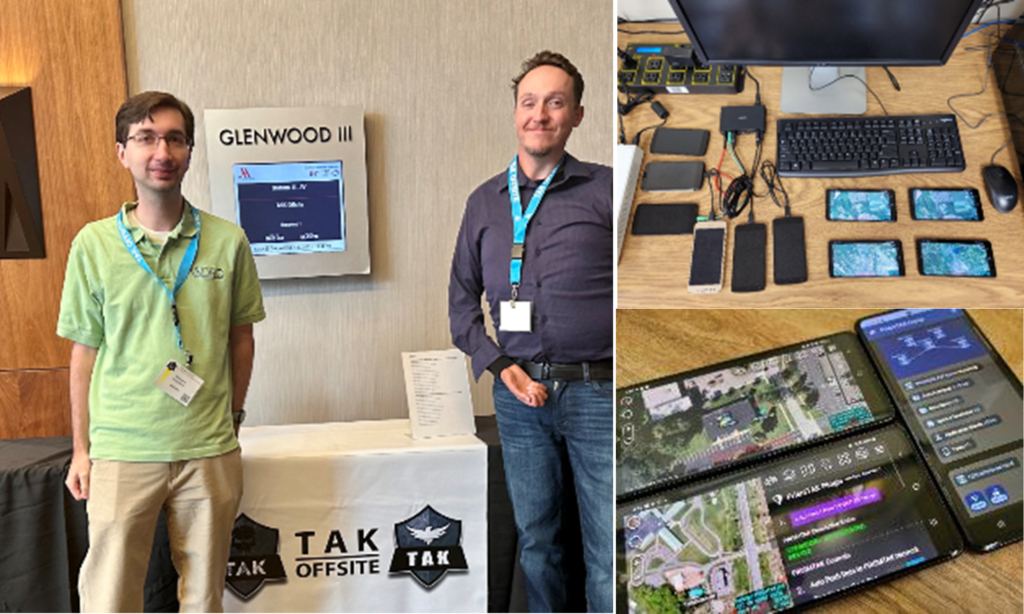
ANDRO’s Chris Maracchion (left) and Timothy Woods (right) at TAK Offsite 2023 in Raliegh, NC. PRISMTAK “maps” TAK server functionality to individual Android devices enabling peer-to-peer information sharing for cursor on target and other situational awareness sharing goals.
Dr. Andy Drozd, President, CEO and Chief Scientist of ANDRO Computational Solutions, LLC, has been nominated to join the Catholic School’s Association of Rome’s Hall of Fame. Read the full story below or at the Daily Sentinel here
ROME — Catholic education has been a vital part of the fabric of the Rome community for more than 150 years, according to members of the Catholic Schools Association of Rome.
Over those years, the city has been home to many Catholic schools, including: St. Aloysius Academy; the Academy of Holy Names; Transfiguration School; St. Mary’s School; St. Peter’s School; Rome Catholic High School and Rome Catholic Junior High School. Currently, local residents in the community are served by Rome Catholic School, which provides faith-based education for students in pre-K through sixth-grade.
Faith-based education, local CSA members say, provides individuals and communities with strength, character and the tools necessary for success. The group is reaching back to honor some of notable figures in the city’s Catholic education with an event that will also help raise funds to ensure the tradition continues in the coming years.
On Friday, Oct. 20, at 6 p.m. the Catholic Schools Association of Rome will host its sixth annual Hall of Fame induction at the Beeches Manor, 7900 Turin Road, recognizing “individuals who have been influential and/or have been influenced by Catholic education in our community,” event organizers said.
This year’s honorees are:
Barbara Chubbuck;
Sister Rosaire Ann DeMare;
Andrew L. Drozd;
Mark D. Vacca; and
Rev. Robert C. Weber.
Tickers for the event are available in advance, for $40, at the following locations: Edible Arrangements, 815 Black River Blvd.; Jervis Public Library, 613 N. Washington St.; the Rome Area Chamber of Commerce, 139 W. Dominick St.; or by contacting Marg Maurer at 315-337-9453, for additional information.
Funds raised from the event will remain in Rome to enhance and enrich programming at Rome Catholic School, organizers said, adding RCS will greet students next week as it launches its 2023-24 school year for students on Thursday, Sept. 7.
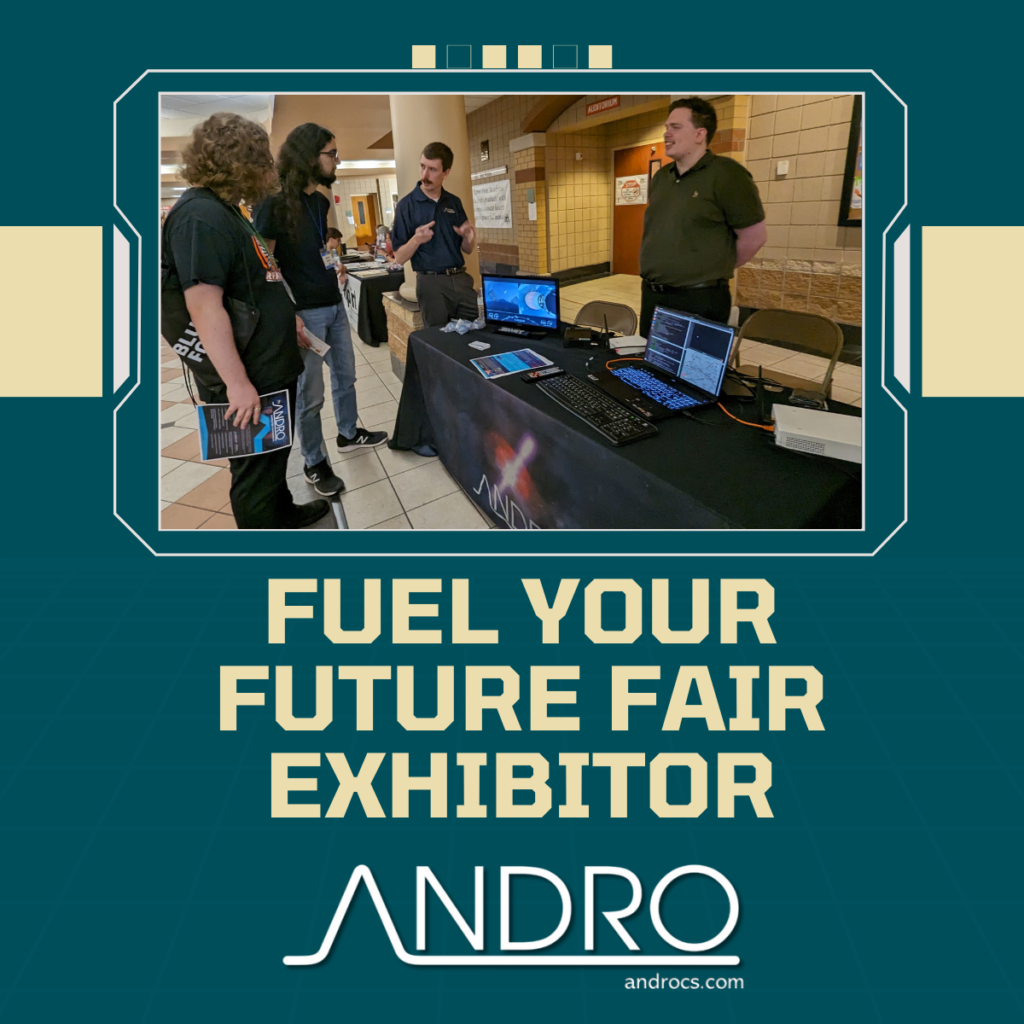
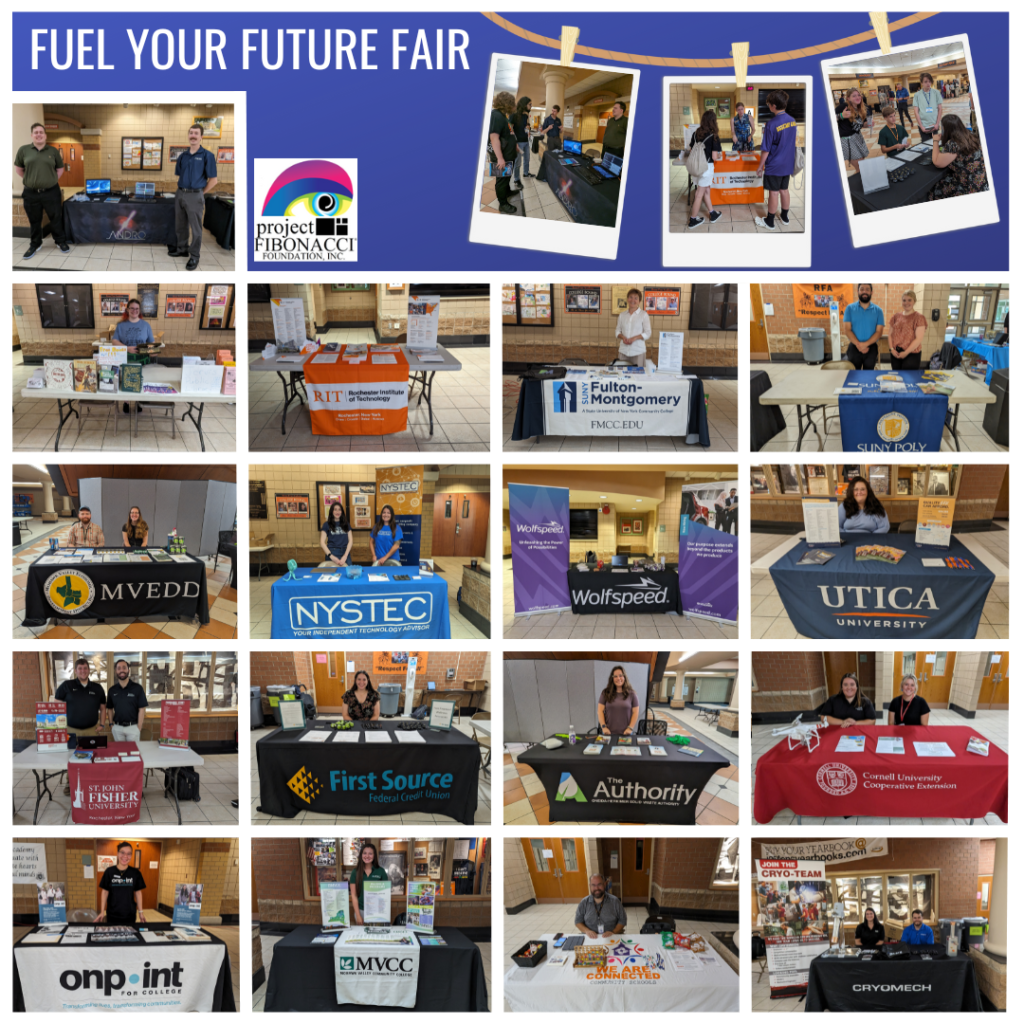
ANDRO Computational Solutions, LLC was among the exhibitors who participated in the 2023 Project Fibonacci STEAM Leadership Conference’s ‘Fuel Your Future Fair’. The fair provided a platform for STEAM scholars to learn more about local academic and professional initiatives. During the event, BJ Blair and Tim Reichert, associate scientists from ANDRO, shared their knowledge and experience in the field of research and development, as well as the application of advanced computer software for various purposes, including waveform development.
Visiting the ANDRO booth, STEAM scholars had the opportunity to learn about the company’s innovative products and services, as well as interact with Blair and Reichert. The engineers’ engagement with the young scholars was particularly insightful as they shared their unique perspectives on the industry and provided valuable advice on pursuing a career in scientific engineering.
Overall, ANDRO’s participation in the ‘Fuel Your Future Fair’ was an excellent opportunity to inspire and educate the next generation of STEAM professionals. The event was a testament to the company’s commitment to promoting research, development, and innovation in the field of engineering.
ANDRO has been a major supporter of the Project Fibonacci Foundation, Inc. since its inception in 2016. Project Fibonacci is a nonprofit 501(c)(3) organization dedicated to STEAM education as a catalyst for workforce preparedness and economic growth. For more information, visit ProjectFibonacci.org
ANDRO is a proud silver sponsor of the 2023 GNU Radio Conference (GRCon), the annual conference for the GNU Radio project and community, established as one of the premier industry events for Software Radio. It is a week-long conference that includes high-quality technical content and valuable networking opportunities. GRCon is a venue that highlights design, implementation, and theory that has been practically applied in a useful way. GRCon attendees come from a large variety of backgrounds, including industry, academia, government, and hobbyists. Offering an annual program with broad appeal, GRCon attracts a variety of participants: people new to software radio who are interested in learning more, seasoned developers ready to show off their latest work, and experts who want to keep their finger on the pulse and direction of the industry.
Dr. Jithin Jagannath, Chief Scientist of Technology, and Director of the Marconi-Rosenblatt AI/ML Innovation Lab at ANDRO Computational Solutions, LLC, will be a keynote presenter at the International Conference on Machine Learning Deep Learning Computational intelligence for Wireless Communication (MDCWC) 2023.
Due to the availability of high-speed computing system, there is the huge scope to still raise the standard of wireless communication in terms of massive connectivity, capacity enhancement, ultra-high reliability, low latency using Machine learning (ML), Deep learning (DL) and Computational intelligence (CI) algorithms. The conference aims in bringing out the wireless research community and machine learning research community to submit their findings integrating ML, DL and CI for wireless communication. About 50 top quality papers are expected to be presented in the Hybrid mode and is planned to publish the presented papers as the book in the series of Signals and communication technology (published by springer). The papers are grouped under one of the four category namely (a)Tutorial papers (b)Survey papers (c) Research articles (d) Data publications on MDCWC.
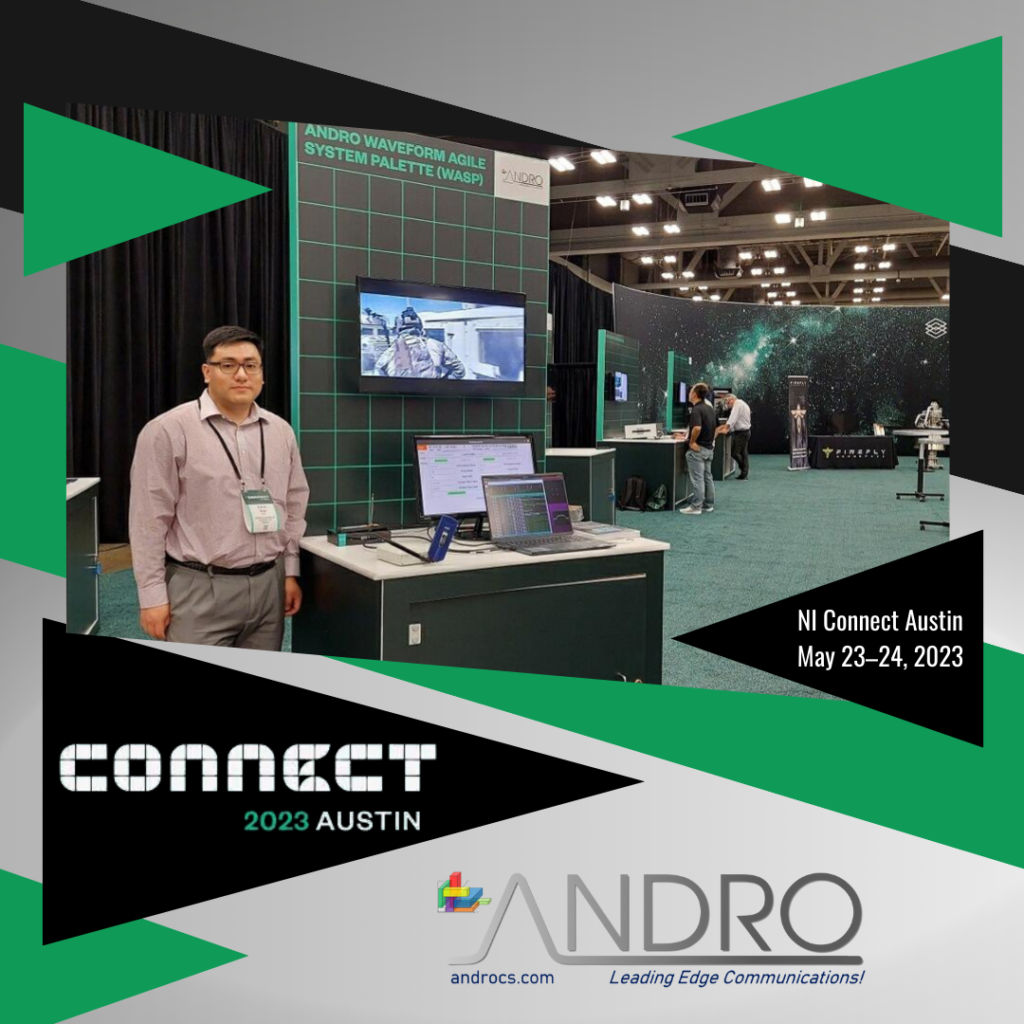
Dr. Ashwin Amanna and David Diaz of ANDRO Computational Solutions, LLC are attending the NI Connect event in Austin, TX taking place Monday, May 22-Wednesday, May 24. Our team will showcase how we revolution waveform development through Waveform as a Service (WaaS) and Waveform Agile System Pallete (WASP).
ANDRO Computational Solutions is proud to work with Ettus Research, an NI brand, to provide solutions for software-based waveform development, AI/ML wireless communications, dynamic spectrum access (DSA), and 5G spectrum planning, management, and coordination.
ROME — The team of ANDRO Computational Solutions, LLC―a scientific research and development company, in collaboration with the Mohawk Valley EDGE―a nonprofit economic development organization, was recently awarded a $50,000 prize under FuzeHub’s Manufacturing Grants Program and its Jeff Lawrence Innovation Fund. The grant will be used to conduct a pilot of “2ndNet”―a wireless rapid alert and intelligent emergency management system for mitigating active threats in schools and public spaces.
FuzeHub, a not-for-profit organization headquartered in Albany, annually sponsors multiple grant opportunities providing resources for startup, small, and mid-size manufacturers and technology companies in New York State. Their funding programs and resources are targeted at the manufacturing and technology sectors to accelerate manufacturing competitiveness and technology commercialization. FuzeHub’s funding partners include Empire State Development’s Division of Science, Technology and Innovation.
The Jeff Lawrence Innovation Fund provides over $1 million in annual allocations of direct assistance for manufacturing, research and development, technology and entrepreneurial endeavors that support activities designed to spur technology development and commercialization across the state. A total of 10 business teams were awarded $50,000 grants during a recent first round conducted earlier this year. Each collaborative team consists of a small-to-medium industry manufacturer, not-for-profit partner, and may include participation by other startups and medium-sized companies.
DR. ANDREW DROZD, PRESIDENT OF ANDRO STATED, “THE GRANT REPRESENTS A STRATEGIC LEAD INVESTMENT BY NEW YORK STATE IN SMALL BUSINESS TECHNOLOGY DEVELOPED HERE IN THE MOHAWK VALLEY, DERIVED FROM FEDERAL/DEFENSE DEPARTMENT RESEARCH; THIS INVESTMENT OPENS THE DOOR TO PRIVATE INVESTOR MATCHING TO BRING THE PROTOTYPE TO FULL MANUFACTURING AND COMMERCIALIZATION READINESS.”
ANDRO productizes software defined radios and embedded software products. The company concentrates on prototype product development for pre-production readiness. ANDRO has access to a network of industry partners to help test, validate, and field protype capabilities for a variety of military and commercial customers.
When asked about the “2ndNet” name, Drozd said, “We already have a nationwide broadband emergency management system called FirstNet operated by AT&T. The 2ndNet provides a secondary safety net, an extra layer of protection. With the exponential rise in school violence and active shooter threats, an urgent need exists for reliable personal communication devices that provide real-time situational awareness during crisis situations.”
Drozd further explained, “Any delay in responding to an active threat in our schools is a threat to the lives of our children and safety of teachers because of a lack of two-way communications and real-time situational awareness. It starts with the rapid detection of an emerging threat and its precise location all the way up to alerting school officials, law enforcement and first responders of the situation without delay. We exploit military technology to fill the gap―a logical step of repurposing a military solution in reply to a ‘demand signal’ to meet a civilian sector need.”
Per Drozd and according to educators who contacted ANDRO during the latter part of 2022, most solutions on the market lack desirable features for rapid alert, communications and coordination. The educators became aware of ANDRO’s wireless Artificial Intelligence and Machine Learning (AI/ML) technologies and wanted to explore whether such solutions could provide improved rapid alert and robust communications for delivering situational awareness when and where needed.
ANDRO’s mesh networking expertise was identified as the key enabler in the roadmap for a 2ndNet deployment in schools and draws on their patented SPEARLink® radio technology. SPEARLink® was developed for the U.S. Army by ANDRO’s Marconi-Rosenblatt AI/ML Innovation Lab led by director Dr. Jithin Jagannath and co-director Anu Jagannath. SPEARLink® devices establish an adaptable mesh network to assure broadband coverage, connectivity, and availability even if traditional broadband access (Wi-Fi, Internet, cell) is sparse or disabled. “The idea is to ensure broad coverage 24/7, when and where it is needed, to rapidly alert all parties concerned, and assure sustainable communications to rapidly and reliably negate the threat,” said Drozd.
ANDRO operates a SPEARLink® fulfillment center to process customer orders and seeks to expand its operations to serve the future 2ndNet market with the help of the FuzeHub grant.
Per Drozd, the 2ndNet is anticipated to demonstrate an unparalleled breakthrough in rapid alert/response to save lives. He envisions one or more pilot projects under the grant program over the next 9-10 months to install, test, and demonstrate the 2ndNet system in participating schools to gather performance metrics and incrementally improve performance towards achieving market readiness.
DROZD NOTED THAT THE COLLABORATION WITH THE MOHAWK VALLEY EDGE PROVIDES A KEY DIFFERENTIATOR AND STRATEGIC BENEFIT FOR THE PROJECT. TIM FITZGERALD, EDGE VICE PRESIDENT OF ECONOMIC DEVELOPMENT, IS ANDRO’S NOT-FOR-PROFIT COUNTERPART ON THE PROJECT COLLABORATING TO HELP DEVELOP A SUSTAINABLE COMMERCIALIZATION PLAN FOCUSED ON MANUFACTURING READINESS AND ROLLING OUT STRATEGIES TO REALIZE ECONOMIC BENEFITS. FITZGERALD ADDS, “WE HOPE TO GUIDE THE STEPS TOWARD MANUFACTURABILITY AND PROFITABILITY, INCLUDING MATCHMAKING SUPPORT TO ENSURE A SUCCESSFUL PROJECT OUTCOME.”
Visit https://fuzehub.com/ for more information on all of the first-round grants awarded.
ROME — ANDRO Computational Solutions of Rome is among five nationwide businesses accelerating innovation at the helm of the Army Small Business Innovation Research (SBIR) CATALYST pilot — a novel program that uses matching capital from transition partners and major weapons systems integrators to drive contracts up to $75 million to tackle Army customer needs.
Announced at the October 2022 Association of the United States Army Annual Meeting and Exposition by the Under Secretary of the Army, Hon. Gabe Camarillo, the Army SBIR CATALYST Program is one of five initiatives incentivizing the Army’s collaborative efforts with industry. Launched in February, the Army SBIR CATALYST pilot requests select small businesses to submit proposals for participation.
While the pilot accepted several small business technology proposals capable of supporting the Army of 2030, it focused on solutions within specific technology ecosystems where small businesses lead in innovation. To ensure the U.S. can overcome any adversary, the Army SBIR CATALYST pilot prioritizes ecosystems including artificial intelligence and machine learning, climate and clean tech, autonomy, and supply-chain logistics in the Indo-Pacific region.
Utilizing greater capital to enhance research and development investments, the Army SBIR Program will award five small businesses base contracts up to $1 million each for a six-to-12-month period of performance. The Army SBIR CATALYST pilot requires each awardee to have previously received an Army SBIR/STTR (Small-business Tech Transfer Research) award within the past four fiscal years, while not having yet received a second SBIR/STTR Phase II under the same project.
The Army SBIR CATALYST Program pilot awardees include ANDRO Computational Solutions, Compound Eye Inc., EM Photonics Inc., R-Dex Systems Inc., and Solvus Global.
The focus of ANDRO’s work under its Marconi-Rosenblatt AI/ML Innovation Lab team will be on DeepSPEC: Artificial Intelligence-Powered Blind Signal Detector and Classifier, in cooperation with potential Army transition partner PEO Intelligence, Electronic Warfare and Sensors (PL Tactical Space Superiority).
Propelling emerging capabilities to transition and commercialization, the Army SBIR CATALYST contract award has potential for multi-phase funding opportunities. After the initial $1 million base award and six-to-12-month period of performance (PoP), recipients could receive Army SBIR CATALYST Phase II Enhancement contracts of up to $7 million of Army SBIR Program funds, up to $3.5 million in funding from the Army transition partner and up to $3.5 million from the technology integrator.
The result is a total funding potential of up to $15 million for each small business, based on a fund ratio of 2:1:1 over an additional 12-to-24-month PoP beyond the base period — for a contract pool of up to $75 million total across all five companies in the Army SBIR CATALYST pilot. Through these investments, the Army SBIR Program leverages capital to buy down risk for the Army’s larger, more scalable acquisition profile.
Via the pilot, the program will overcome untapped potential to transition Army technology challenges into major weapon systems programs by strongly synchronizing small business innovators with Army transition partners and integrators.
As a result, it will provide resources for advanced prototype development testing and transition.
Visit the Army Applied SBIR website for information about the awards.
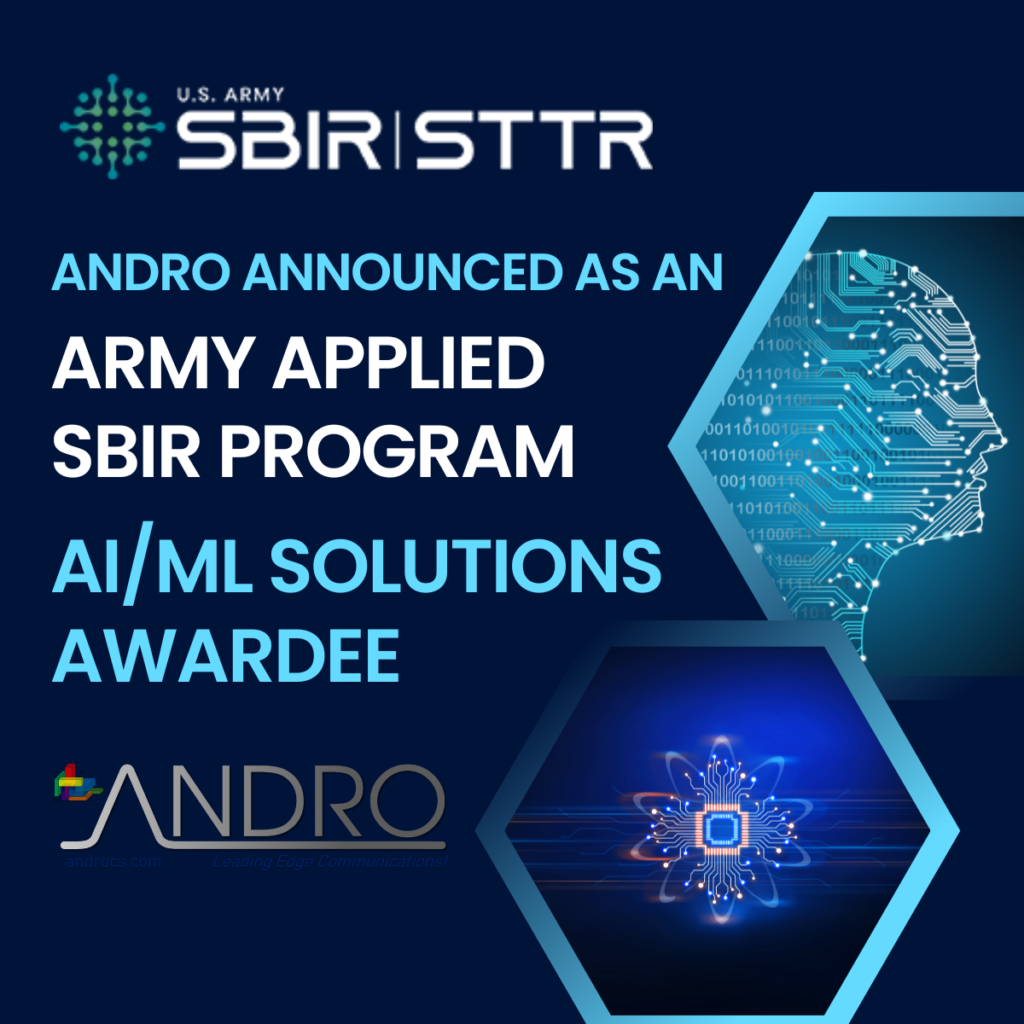
ANDRO Computational Solutions, LLC and its Marconi Rosenblatt AI/ML Innovation Lab is proud to announce its recent SBIR award through the Army Applied SBIR Program in its first AI/ML-focused open-topic solicitation. The U.S. Army’s data-intelligence capabilities require novel artificial intelligence and machine learning technologies to ensure the American soldier can overcome any adversary on any battlefield, real world or digital.
In the AI/ML-focused open-topic solicitation, the Army Applied SBIR Program awarded 39 small-business contracts to deliver AI/ML solutions — ranging from natural language processing to data analysis and labeling — to identify information such as images, spoken words, text files and videos to build out machine-learning models. These models use the data to “teach” AI and improve the accuracy of information within their database.
“Through this open-topic solicitation, the program received a record-setting 420 proposals for disruptive technologies that inject game-changing innovation into Army programs,” said Dr. Matt Willis, director of Army Prize Competitions and the Army Applied SBIR Program. “Additionally, these innovations tackle critical modernization challenges while advancing the goals of the National Defense Strategy.”
The companies each received an Army Small Business Innovation Research Phase I contract up to $150,000 to develop AI/ML solutions. Utilizing the Army’s investment, the businesses will prototype technologies to improve Soldier data access and effectiveness across Army operations.
The Army Applied SBIR Program offers Phase I contracts to nontraditional small businesses with solutions that show technical merit, feasibility and commercial potential. The program also provides funds to businesses that can help the Army achieve its goals and earn additional federal support in Phase II to mature technologies ready for demonstration.
Through the Army Applied SBIR Program, companies collaborate with technical, acquisition and operational subject matter experts. These specialists offer insight into the Army’s technological opportunities while guiding companies through the Army research and development ecosystem.
The Army Applied SBIR Program releases contract opportunities on a rolling basis to respond to current and anticipated warfighting technology needs. For eligibility information and a list of open solicitations, please visit the Army SBIR|STTR website.
The Office of the Assistant Secretary of the Army for Acquisition, Logistics and Technology provides the American Soldier a decisive advantage in any mission by developing, acquiring, fielding and sustaining the world’s most advanced equipment and services. It also leverages technologies and capabilities to meet current and future Army needs. For more information, please visit the Army ASA(ALT) website.