ANDRO is proud to announce that we have been recognized by the Central New York Business Journal as one of CNY’s Best Places to Work!
On September 8th, 2025, members of our team, including Dr. Andy Drozd, President of ANDRO, attended the 13th Annual Awards Ceremony at the Timber Banks Golf and Country Club in Baldwinsville. It was a wonderful evening celebrating the many outstanding organizations that make Central New York a thriving place to live and work.
We were honored to be awarded 11th place in the 15–50 Employees category, alongside 22 other inspiring contenders. This recognition is a reflection of the culture, innovation, and teamwork that defines ANDRO.
A Culture of Excellence
At ANDRO, our people are our greatest strength. This award reinforces our commitment to fostering an environment where creativity, collaboration, and community thrive. We are grateful to our dedicated team whose passion and hard work continue to make ANDRO a truly exceptional place to work.
We extend our congratulations to all the organizations recognized this year and thank the Central New York Business Journal for celebrating workplace excellence in our community.
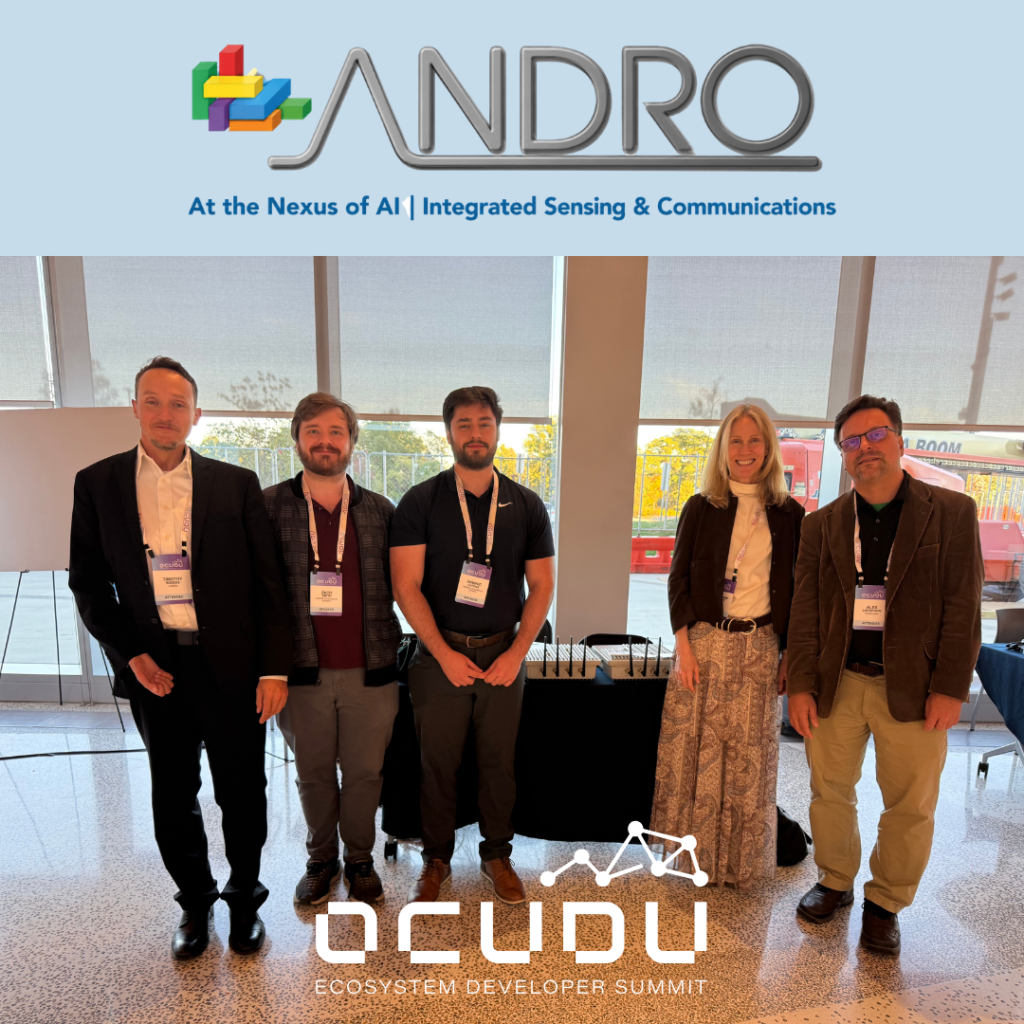
ANDRO Computational Solutions was proud to join industry leaders, developers, telecom operators, and academic researchers at the OCUDU Ecosystem Developer Summit, an event focused on advancing open-source wireless technology and shaping the next generation of connectivity.
“Dynamic Spectrum Sharing With an OCUDU-Based Open 5G RAN.”
The demonstration highlighted innovative approaches to dynamic spectrum sharing using an open 5G Radio Access Network (RAN), supporting more flexible, efficient, and adaptable wireless communications.
As the industry continues to advance toward 6G, collaboration across research, development, and real-world applications is essential to unlocking new capabilities and accelerating innovation.
ANDRO is proud to contribute its expertise in spectrum sharing and advanced wireless technologies to this growing ecosystem.
Thank you to the OCUDU community and our collaborators at Peraton Labs for the opportunity to exchange ideas, demonstrate emerging capabilities, and help shape the future of wireless connectivity.
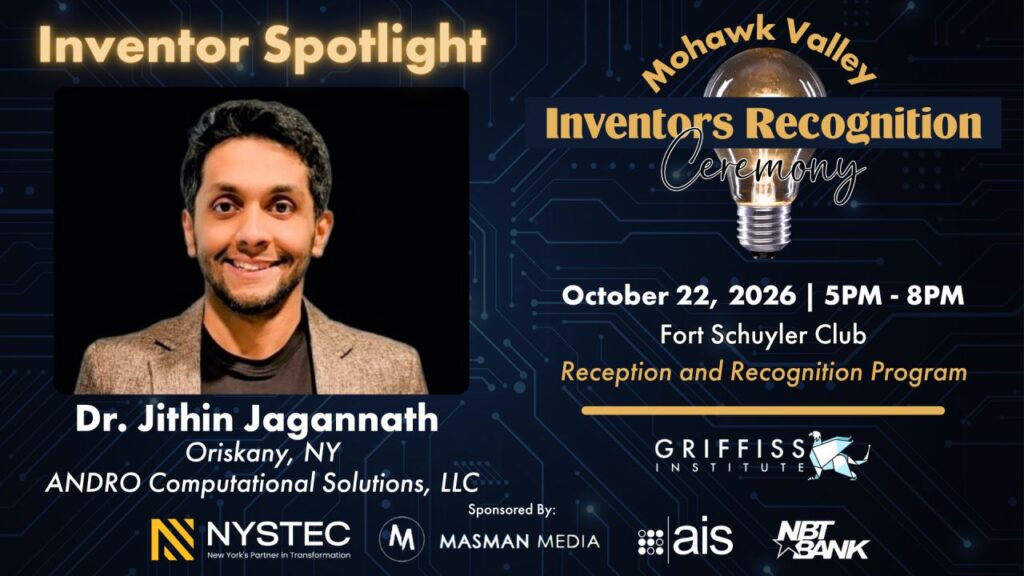
Dr. Jithin Jagannath of Oriskany, NY is being recognized as a Distinguished Mohawk Valley Inventor for two 2025 U.S. patents associated with ANDRO Computational Solutions, LLC (US 12369038 B2 & US 12425391 B2).
His patented work spans radio-frequency device identification using machine learning, 5G, and network device authentication. Together, these inventions explore ways to identify and authenticate devices using advanced technologies.
Dr. Jagannath is one of the Mohawk Valley inventors being recognized this year for their contributions to innovation across the region.
Join us in celebrating Dr. Jagannath and the other 2025 Mohawk Valley Inventors at the Mohawk Valley Inventors Recognition Ceremony on October 22 at the Fort Schuyler Club in Utica, from 5–8 p.m. Learn more and get your ticket today: https://lnkd.in/eyvB49US
Dr. Andrew L. Drozd, President and Chief Scientist of ANDRO Computational Solutions and Founder and Chairman of The Project Fibonacci Foundation, recently joined the Rotary Club of New Hartford as a guest speaker, sharing his perspective on the intersection of technology, education, community leadership and service.
During the presentation, Drozd highlighted the continued growth of advanced research and technology in the Mohawk Valley, including ANDRO’s work in artificial intelligence, wireless communications and spectrum technologies. He also discussed the mission of The Project Fibonacci Foundation and its efforts to strengthen the region’s STEAM pipeline by connecting science and technology with creativity, leadership and hands-on learning. Rotary In-Gear 9-30-26
Since its founding in 2015, Project Fibonacci’s flagship STEAM Leadership Conference has engaged more than 570 students through immersive learning, mentorship and workforce development experiences. The Foundation’s growing portfolio of programs and community partnerships reflects a broader goal of creating opportunities for young people while helping build a strong, innovative regional workforce.
Drozd also spoke about the importance of community involvement at every level — from taking on business and civic leadership roles to getting involved at the grassroots level. He encouraged others to invest their time and talents in the communities where they live and work, emphasizing that meaningful change often begins with individuals choosing to participate.
Community service has long been an important part of that philosophy. Project Fibonacci and ANDRO support numerous local initiatives, including Community Coming Together, a collaborative effort addressing food insecurity and providing food assistance to families throughout the region. Rotary In-Gear 9-30-26
Drozd also shared the personal importance of music and the arts in creating balance in his life. His involvement ranges from chorale singing with his church choir and the Utica Maennerchor German-American Chorus to his longtime participation with the Mohawk Valley Chapter of the Barbershop Harmony Society. These experiences provide both personal enrichment and another meaningful way to connect with and contribute to the community. His involvement with the Barbershop Harmony Society and appreciation for the arts were also highlighted by the Rotary Club following his presentation. Rotary In-Gear 9-30-26
Together, these activities complement Drozd’s broader investments in technology, education, workforce development and community service and reflect his vision of “Enriched STEAM Communities Driving a Modern Renaissance.” Whether through professional leadership, volunteer service, education or the arts, his message emphasized the value of investing personally in the strength and vitality of the community.
“It is an investment worth its weight in gold,” Drozd said.
His message closely aligned with Rotary’s commitment to service and community leadership — demonstrating that professional achievement and technological advancement can have an even greater impact when paired with a willingness to serve, participate and give back.
ANDRO and The Project Fibonacci Foundation thank the Rotary Club of New Hartford for the invitation and the opportunity to connect with fellow community leaders committed to service and regional impact.
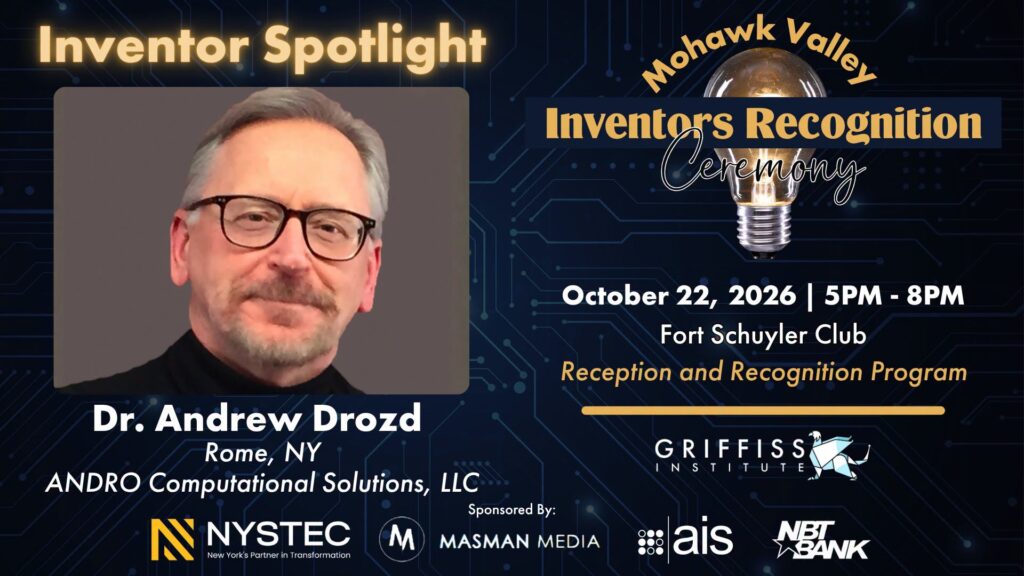
ANDRO Computational Solutions is proud to celebrate Dr. Andrew Louis Drozd, President and Chief Scientist of ANDRO, who has been named a Distinguished Mohawk Valley Inventor in recognition of two U.S. patents issued in 2025 and associated with ANDRO Computational Solutions.
The patents — U.S. Patent Nos. 12,369,038 B2 and 12,425,391 B2 — represent innovations in radio-frequency device identification using machine learning and network device authentication.
Together, the technologies explore advanced methods for identifying and authenticating devices, reflecting ANDRO’s continued work at the intersection of artificial intelligence, machine learning, wireless communications, cybersecurity, and spectrum technologies.
Dr. Drozd is among a group of Mohawk Valley inventors being recognized for patented innovations connected to communities throughout the region. His recognition also highlights the advanced research and technology development taking place right here in the Mohawk Valley.
Dr. Drozd and his fellow honorees will be celebrated at the 2025 Mohawk Valley Inventors Recognition Ceremony, taking place October 22 at the Fort Schuyler Club in Utica.
ANDRO congratulates Dr. Drozd and all of this year’s distinguished inventors for their contributions to innovation, technology, and the Mohawk Valley’s growing research and development community.
For tickets and more information: ANDRO Computational Solutions is proud to celebrate Dr. Andrew Louis Drozd, President and Chief Scientist of ANDRO, who has been named a Distinguished Mohawk Valley Inventor in recognition of two U.S. patents issued in 2025 and associated with ANDRO Computational Solutions.
The patents — U.S. Patent Nos. 12,369,038 B2 and 12,425,391 B2 — represent innovations in radio-frequency device identification using machine learning and network device authentication.
Together, these technologies explore advanced methods for identifying and authenticating devices, reflecting ANDRO’s continued work at the intersection of artificial intelligence, machine learning, wireless communications, cybersecurity, and spectrum technologies.
Dr. Drozd is among the Mohawk Valley inventors being recognized for patented innovations connected to communities throughout the region. His recognition also highlights the advanced research and technology development taking place right here in the Mohawk Valley.
Dr. Drozd and his fellow honorees will be celebrated at the Mohawk Valley Inventors Recognition Ceremony on October 22, 2026, at the Fort Schuyler Club in Utica.
ANDRO congratulates Dr. Drozd and all of this year’s distinguished inventors for their contributions to innovation, technology, and the Mohawk Valley’s growing research and development community.
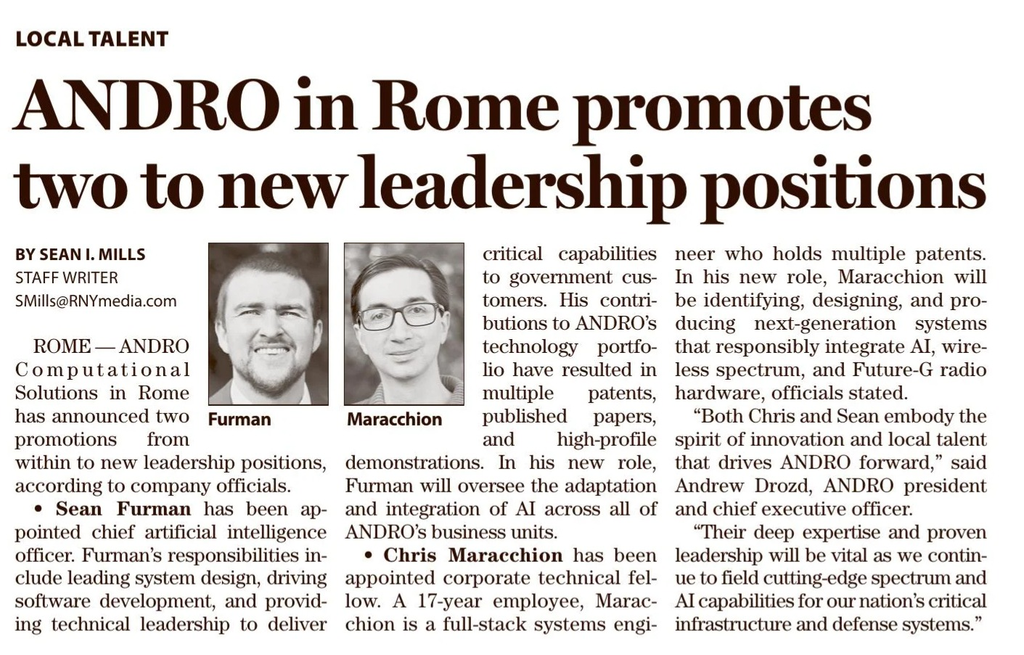
ANDRO Computational Solutions, LLC, a leader in advanced wireless research and spectrum technology development, today announced the strategic promotions of two long-standing engineering leaders, Chris Maracchion and Sean Furman. These appointments reinforce ANDRO’s commitment to pioneering next-generation communications, autonomous systems, and artificial intelligence (AI) for national defense, public safety, and commercial applications.
Chris Maracchion Appointed Corporate Technical Fellow
Chris Maracchion, a Rome native with over 17 years of dedicated service at ANDRO, has been elevated to the role of Inaugural Corporate Technical Fellow. A graduate of SUNY Polytechnic Institute with a background in electrical engineering, Maracchion is a Full-Stack Systems Engineer who has been foundational to ANDRO’s research and development. His technical expertise spans communications, radar, and sensor systems, where he leads system design and software development.
Maracchion holds pivotal patents in wireless device network policies and real-time spectrum access. His innovative work focuses on creating new radio technologies that enable wireless devices to coexist efficiently, allowing users to connect directly through advanced peer-to-peer networking. In his new role as Corporate Technical Fellow, Maracchion will be instrumental in identifying, designing, and producing next-generation systems that responsibly integrate AI, wireless spectrum, and Future-G radio hardware.
Sean Furman Appointed Chief Artificial Intelligence Officer
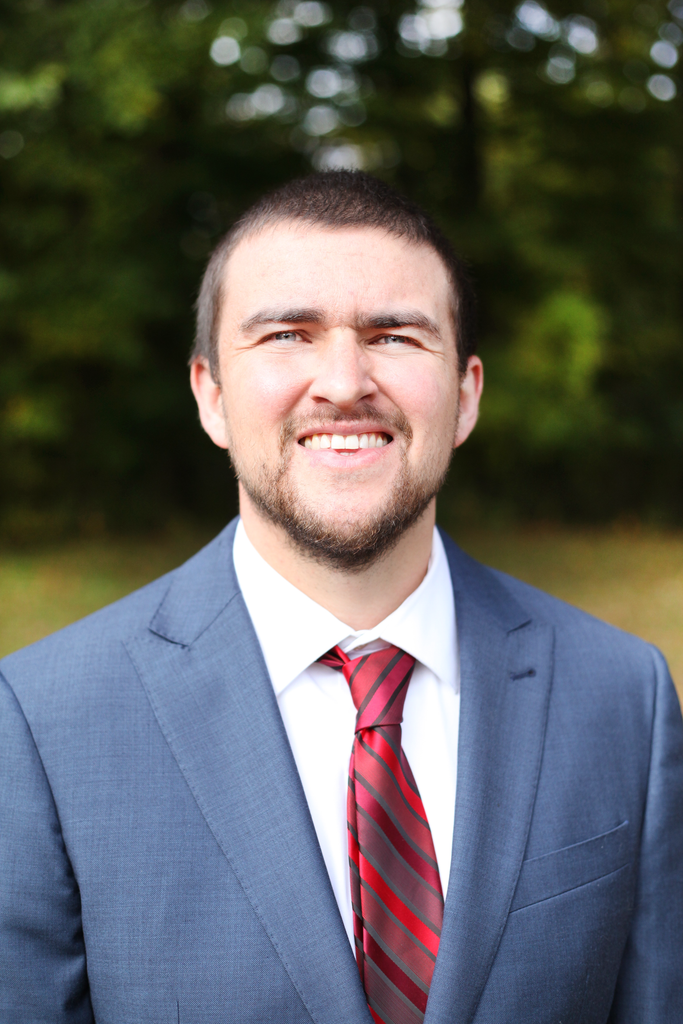
Sean Furman, a Central New York native who has been with ANDRO for over a decade, has been promoted to Chief Artificial Intelligence Officer (CAIO). Furman brings a robust academic background to the executive team, holding a bachelor’s degree in electrical engineering from SUNY Polytechnic Institute and a master’s degree from Clarkson University. Throughout his tenure as a senior engineer, his work has focused on communications, autonomous systems, applied machine learning, and signal processing.
Furman’s responsibilities include leading system design, driving software development, and providing technical leadership to deliver critical capabilities to government customers. His contributions to ANDRO’s technology portfolio have resulted in multiple patents, published papers, and high-profile demonstrations. As CAIO, Furman will oversee the adaptation and integration of AI across all of ANDRO’s business units, steering the company’s future growth in autonomous and intelligent systems.
“Both Chris and Sean embody the spirit of innovation and local talent that drives ANDRO forward,” said Dr. Andrew Drozd, President and CEO of ANDRO Computational Solutions. “Their deep expertise and proven leadership will be vital as we continue to field cutting-edge spectrum and AI capabilities for our nation’s critical infrastructure and defense systems.”
About ANDRO Computational Solutions, LLC. ANDRO, headquartered in Rome, NY, is a premier provider of AI-based scientific research, engineering, and software development services. The company, operating for over 32 years, specializes in secure wireless communications, autonomous systems, and artificial intelligence solutions for government and commercial clients.
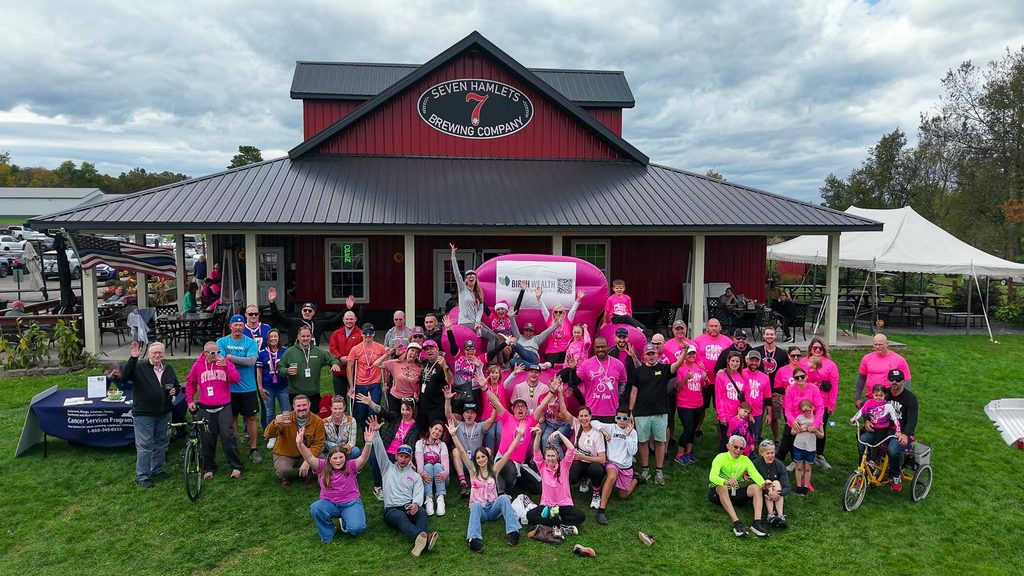
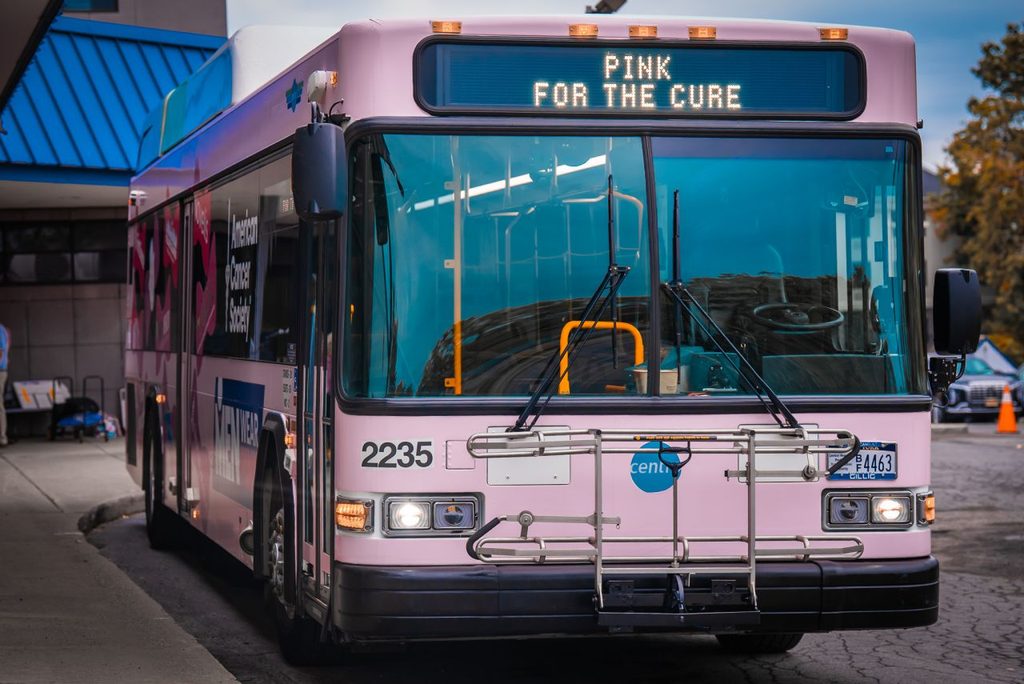
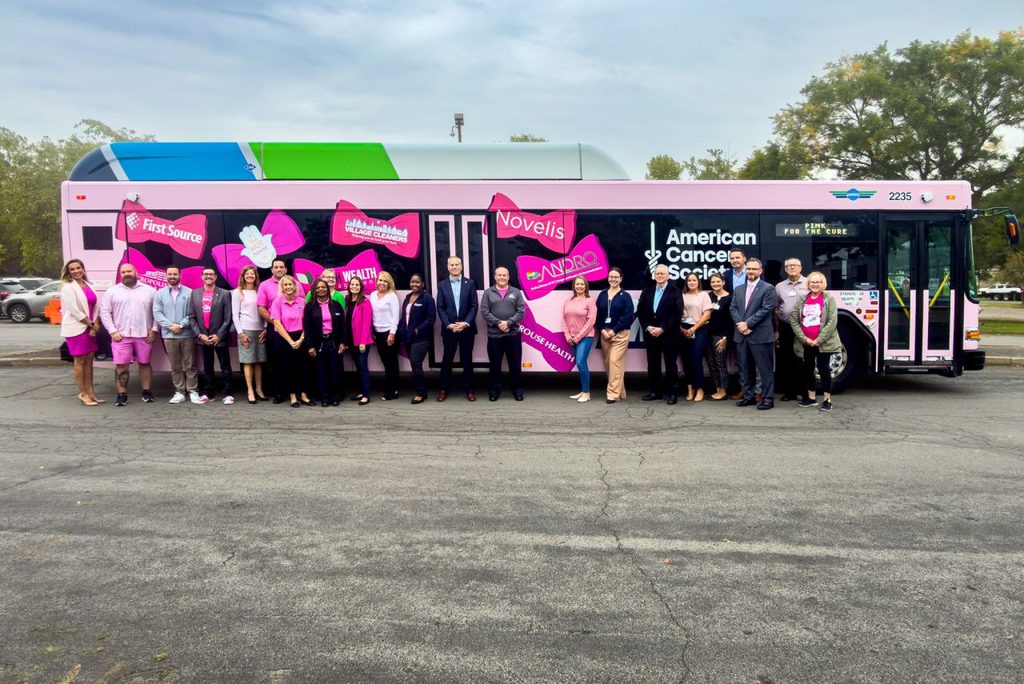
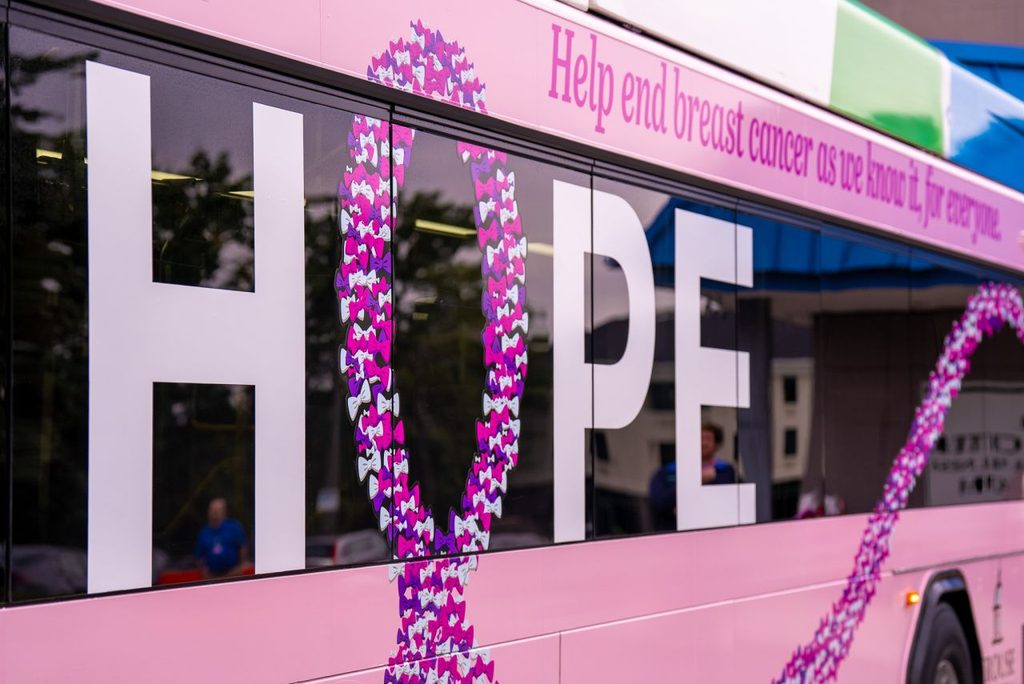
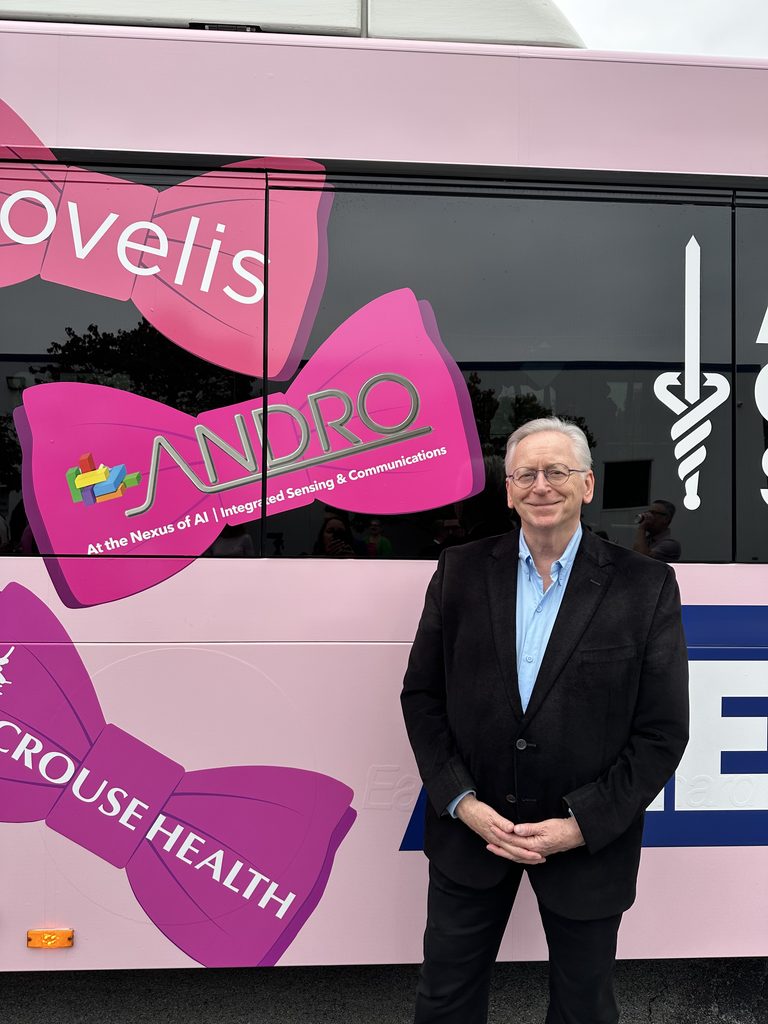
ANDRO Computational Solutions is proud to support the American Cancer Society’s Central New York Men Wear Pink campaign and help raise awareness during Breast Cancer Awareness Month.
This year’s campaign officially kicked off with the launch of the Pink Bus, made possible through the support of Centro – Central New York Regional Transportation Authority, Lamar Transit Advertising, and Crouse Health. As the Pink Bus travels throughout Central New York, it serves as a visible reminder of the importance of cancer screenings, early detection, and continued support for those impacted by breast cancer.
With 1 in 8 women expected to be diagnosed with breast cancer in their lifetime, raising awareness and supporting access to resources remains critically important.
ANDRO is honored to join First Source Federal Credit Union, Birch Wealth Management, Acropolis Realty Group, Novelis, Village Cleaners, Hot House Yoga, and the Central New York Men Wear Pink ambassadors in bringing our community together in support of the American Cancer Society’s mission to end cancer as we know it, for everyone.
At ANDRO, supporting the communities where we live and work is an important part of who we are. We are proud to stand alongside our fellow Central New York organizations, advocates, survivors, families, and supporters throughout Breast Cancer Awareness Month and beyond.
NDRO Computational Solutions is proud to be part of a newly awarded national effort to advance dynamic spectrum sharing technologies through the Advanced Spectrum Coexistence Demonstration (ASC-D) Program.
Led by the Kostas Research Institute at Northeastern University in partnership with the National Spectrum Consortium, the project brings together an exceptional team of industry and academic leaders, including Battelle, Northeastern University, SMA-RTY, zTouch Networks, and ANDRO. Together, the team will validate innovative technologies that allow military and commercial wireless systems to safely and efficiently share valuable radio frequency spectrum.
At the heart of the project is Battelle’s RavenStar™ Ultra-Wideband Massive MIMO Radio Unit, an advanced communications platform capable of dynamically adapting frequencies, beam patterns, and transmission characteristics in real time. By combining this technology with advanced sensing and decision-making capabilities, the team aims to demonstrate how spectrum can be shared without compromising critical national security operations.
As a member of the project team, ANDRO will contribute its expertise in advanced communications, spectrum technologies, and mission-focused engineering to support system integration, testing, and demonstration activities.
This effort represents another exciting opportunity for ANDRO to help develop technologies that strengthen national security while enabling the next generation of commercial wireless communications.
Join us on Thursday, August 13 at Rome Country Club for a day of golf, networking, and community support. The tournament will feature a 9:30 a.m. shotgun start and brings together local businesses, organizations, and community leaders for one of the Chamber’s signature annual events.
As organizations committed to strengthening our region through innovation, education, and community engagement, ANDRO and Project Fibonacci Foundation are honored to support this event and the continued growth of Rome’s business community.
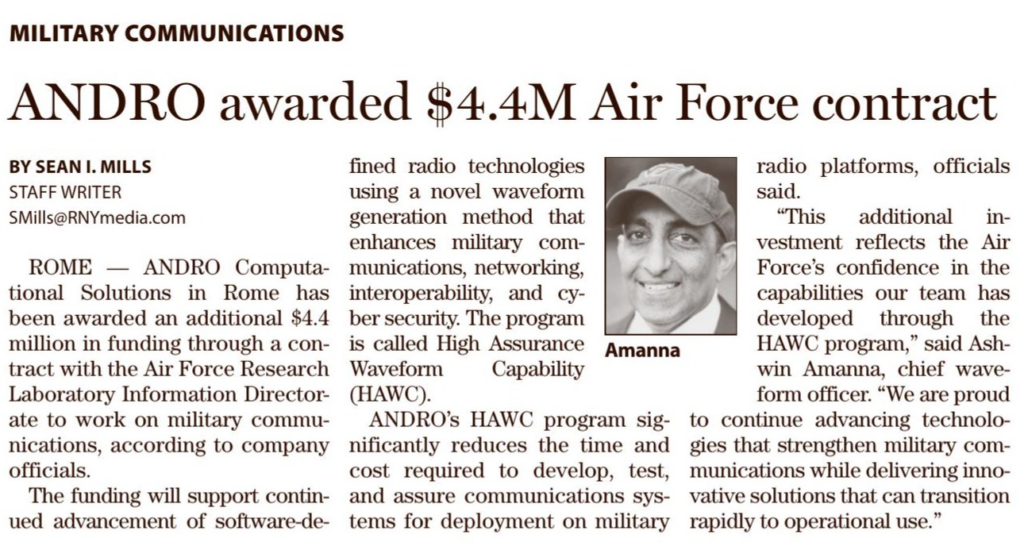
ROME, NY — ANDRO Computational Solutions, LLC, located at Griffiss Business & Technology Park in Rome, has been awarded an additional $4.4 million in funding under its High Assurance Waveform Capability (HAWC) research and development contract with the Air Force Research Laboratory Information and Spectrum Warfare Directorate (AFRL/RF). The funding will support continued advancement of software-defined radio technologies using a novel waveform generation method that enhances military communications, networking, interoperability, and cyber security.
ANDRO’s HAWC program significantly reduces the time and cost required to develop, test, and assure communications systems for deployment on military radio platforms. This latest funding supports the modernization and operational transition of the Integrated Broadcast Service (IBS) PACE (Primary, Alternate, Contingency, Emergency) capability. Through rapid waveform development, rigorous testing, and advanced analytics, the HAWC program has established a reputation for excellence in iterative engineering and operational innovation, helping ensure IBS remains at the forefront of mission readiness.
The effort is a collaborative initiative involving multiple industry partners, each contributing specialized expertise to enhance IBS performance, reliability, and operational effectiveness. ANDRO’s role highlights the company’s leadership in advanced technology solutions and its longstanding commitment to supporting national security objectives. ANDRO president, Dr. Andrew Drozd, expressed his gratitude for the HAWC team’s efforts and AFRL’s support on behalf of preserving national security and protecting our warfighters via the technology.
The work is being performed at ANDRO’s Heisenberg Lab under the leadership of Dr. Ashwin Amanna, Chief Waveform Officer, and a multidisciplinary team of engineers, scientists, and project managers. The program continues to support highly skilled technical employment and innovation in the Mohawk Valley region. The award reinforces the growing role of the Griffiss Business & Technology Park as a national center for advanced communications, cybersecurity, and defense innovation.
“This additional investment reflects the Air Force’s confidence in the capabilities our team has developed through the HAWC program,” said Amanna. “We are proud to continue advancing technologies that strengthen military communications while delivering innovative solutions that can transition rapidly to operational use.”
ANDRO provides research, engineering, and technical services to defense and commercial industries in the areas of advanced spectrum exploitation, secure wireless communications, software-based waveform development, cognitive software defined radio networking, multisensor data fusion, and sensor resource management. For more information on ANDRO, including employment opportunities, visit www.androcs.com.
About AFRL: The Air Force Research Laboratory is the Department of the Air Force’s primary scientific research and development center and one of six centers within Air Force Materiel Command. AFRL leads the discovery, development and delivery of technologies for air, space and the multidomain. With a workforce spanning seven mission areas at more than 40 locations worldwide, AFRL conducts research ranging from basic science to advanced technology development. For more information, visit afresearchlab.com.
Distribution A. Approved for Public Release; Distribution Unlimited; AFRL-2026-3016, Jul 2026
ANDRO Computational Solutions is proud to announce its participation in a newly awarded effort under the Advanced Spectrum Coexistence Demonstration (ASC-D) Program, led by the Kostas Research Institute (KRI) at Northeastern University and supported through a contract with the National Spectrum Consortium (NSC) in partnership with the Department of War (DoW).
The project brings together an accomplished team of industry, academic, and technology partners, including Battelle, the Kostas Research Institute (KRI) at Northeastern University, Northeastern University, ANDRO Computational Solutions, SMA-RTY, and zTouch Networks. Together, the team will validate and demonstrate advanced spectrum-sharing technologies designed to improve spectrum efficiency while ensuring the protection of critical national security operations.
At the center of the effort is Battelle’s RavenStar™ Ultra-Wideband Massive MIMO Radio Unit, a highly agile radio platform capable of dynamically adapting frequencies, beam patterns, and transmission characteristics in real time. Combined with sensing, policy, and decision-making capabilities developed by KRI and Northeastern University’s Institute for Intelligent Networked Systems (INSI), the integrated solution aims to demonstrate how military and commercial users can safely coexist within valuable mid-band spectrum resources.
The Department of War currently utilizes portions of the 3.1–3.45 GHz spectrum for mission-critical operations. Through dynamic spectrum sharing technologies, the ASC-D Program seeks to determine whether these frequencies can be shared with commercial telecommunications providers without disrupting military activities. Successful demonstration of this capability could help address growing demand for wireless connectivity while maximizing the efficient use of limited spectrum resources.
As a member of the project team, ANDRO will contribute its expertise in advanced communications, spectrum technologies, and mission-focused engineering solutions to support system integration, testing, and demonstration activities.
The ASC-D Program reflects a growing national focus on developing innovative technologies that enable secure spectrum coexistence, ensuring both military readiness and continued expansion of next-generation wireless services.
Participation in this effort further strengthens ANDRO’s commitment to advancing cutting-edge communications technologies that support both national security objectives and the future of commercial wireless innovation.