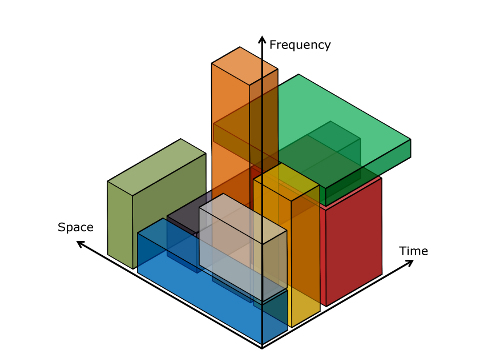
NDRO Computational Solutions is proud to be part of a newly awarded national effort to advance dynamic spectrum sharing technologies through the Advanced Spectrum Coexistence Demonstration (ASC-D) Program.
Led by the Kostas Research Institute at Northeastern University in partnership with the National Spectrum Consortium, the project brings together an exceptional team of industry and academic leaders, including Battelle, Northeastern University, SMA-RTY, zTouch Networks, and ANDRO. Together, the team will validate innovative technologies that allow military and commercial wireless systems to safely and efficiently share valuable radio frequency spectrum.
At the heart of the project is Battelle's RavenStar™ Ultra-Wideband Massive MIMO Radio Unit, an advanced communications platform capable of dynamically adapting frequencies, beam patterns, and transmission characteristics in real time. By combining this technology with advanced sensing and decision-making capabilities, the team aims to demonstrate how spectrum can be shared without compromising critical national security operations.
As a member of the project team, ANDRO will contribute its expertise in advanced communications, spectrum technologies, and mission-focused engineering to support system integration, testing, and demonstration activities.
This effort represents another exciting opportunity for ANDRO to help develop technologies that strengthen national security while enabling the next generation of commercial wireless communications.
Read the full story here: Battelle’s RavenStar™...
 NDRO Computational Solutions is proud to be part of a newly awarded national effort to advance dynamic spectrum sharing technologies through the Advanced Spectrum Coexistence Demonstration (ASC-D) Program. Led by the Kostas Research Institute at Northeastern University in partnership with the National Spectrum Consortium, the project brings together an exceptional team of industry and academic leaders, including Battelle, Northeastern University, SMA-RTY, zTouch Networks, and ANDRO. Together, the team will validate innovative technologies that allow military and commercial wireless systems to safely and efficiently share valuable radio frequency spectrum. At the heart of the project is Battelle's RavenStar™ Ultra-Wideband Massive MIMO Radio Unit, an advanced communications platform capable of dynamically adapting frequencies, beam patterns, and transmission characteristics in real time. By combining this technology with advanced sensing and decision-making capabilities, the team aims to demonstrate how spectrum can be shared without compromising critical national security operations. As a member of the project team, ANDRO will contribute its expertise in advanced communications, spectrum technologies, and mission-focused engineering to support system integration, testing, and demonstration activities. This effort represents another exciting opportunity for ANDRO to help develop technologies that strengthen national security while enabling the next generation of commercial wireless communications. Read the full story here: Battelle’s RavenStar™...