ANDRO is proud to announce that we have been recognized by the Central New York Business Journal as one of CNY’s Best Places to Work!
On September 8th, 2025, members of our team, including Dr. Andy Drozd, President of ANDRO, attended the 13th Annual Awards Ceremony at the Timber Banks Golf and Country Club in Baldwinsville. It was a wonderful evening celebrating the many outstanding organizations that make Central New York a thriving place to live and work.
We were honored to be awarded 11th place in the 15–50 Employees category, alongside 22 other inspiring contenders. This recognition is a reflection of the culture, innovation, and teamwork that defines ANDRO.
A Culture of Excellence
At ANDRO, our people are our greatest strength. This award reinforces our commitment to fostering an environment where creativity, collaboration, and community thrive. We are grateful to our dedicated team whose passion and hard work continue to make ANDRO a truly exceptional place to work.
We extend our congratulations to all the organizations recognized this year and thank the Central New York Business Journal for celebrating workplace excellence in our community.
ANDRO Computational Solutions is proud to announce its participation in a newly awarded effort under the Advanced Spectrum Coexistence Demonstration (ASC-D) Program, led by the Kostas Research Institute (KRI) at Northeastern University and supported through a contract with the National Spectrum Consortium (NSC) in partnership with the Department of War (DoW).
The project brings together an accomplished team of industry, academic, and technology partners, including Battelle, the Kostas Research Institute (KRI) at Northeastern University, Northeastern University, ANDRO Computational Solutions, SMA-RTY, and zTouch Networks. Together, the team will validate and demonstrate advanced spectrum-sharing technologies designed to improve spectrum efficiency while ensuring the protection of critical national security operations.
At the center of the effort is Battelle’s RavenStar™ Ultra-Wideband Massive MIMO Radio Unit, a highly agile radio platform capable of dynamically adapting frequencies, beam patterns, and transmission characteristics in real time. Combined with sensing, policy, and decision-making capabilities developed by KRI and Northeastern University’s Institute for Intelligent Networked Systems (INSI), the integrated solution aims to demonstrate how military and commercial users can safely coexist within valuable mid-band spectrum resources.
The Department of War currently utilizes portions of the 3.1–3.45 GHz spectrum for mission-critical operations. Through dynamic spectrum sharing technologies, the ASC-D Program seeks to determine whether these frequencies can be shared with commercial telecommunications providers without disrupting military activities. Successful demonstration of this capability could help address growing demand for wireless connectivity while maximizing the efficient use of limited spectrum resources.
As a member of the project team, ANDRO will contribute its expertise in advanced communications, spectrum technologies, and mission-focused engineering solutions to support system integration, testing, and demonstration activities.
The ASC-D Program reflects a growing national focus on developing innovative technologies that enable secure spectrum coexistence, ensuring both military readiness and continued expansion of next-generation wireless services.
Participation in this effort further strengthens ANDRO’s commitment to advancing cutting-edge communications technologies that support both national security objectives and the future of commercial wireless innovation.
TROY, NY — The 2026 Biomedical Engineering (BME) Senior Capstone Design Showcase, sponsored by Rensselaer Polytechnic Institute (RPI), took place at the Shirley Ann Jackson, Ph.D. Center for Biotechnology & Interdisciplinary Studies (CBIS) at the RPI Campus in Troy, NY on April 28. The 29 graduating senior BME design teams presented their research posters and prototypes, demonstrating real-world healthcare technology, diagnostic systems, and clinical solutions.
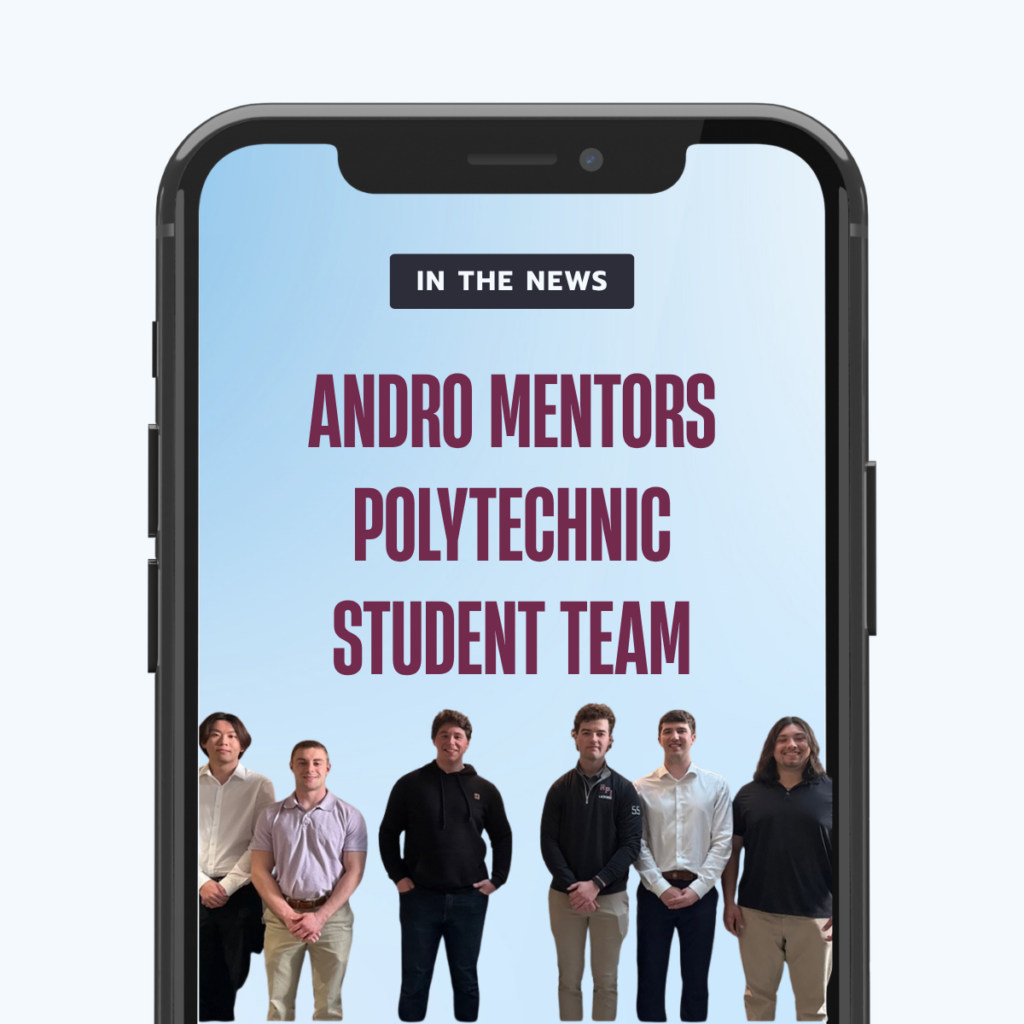
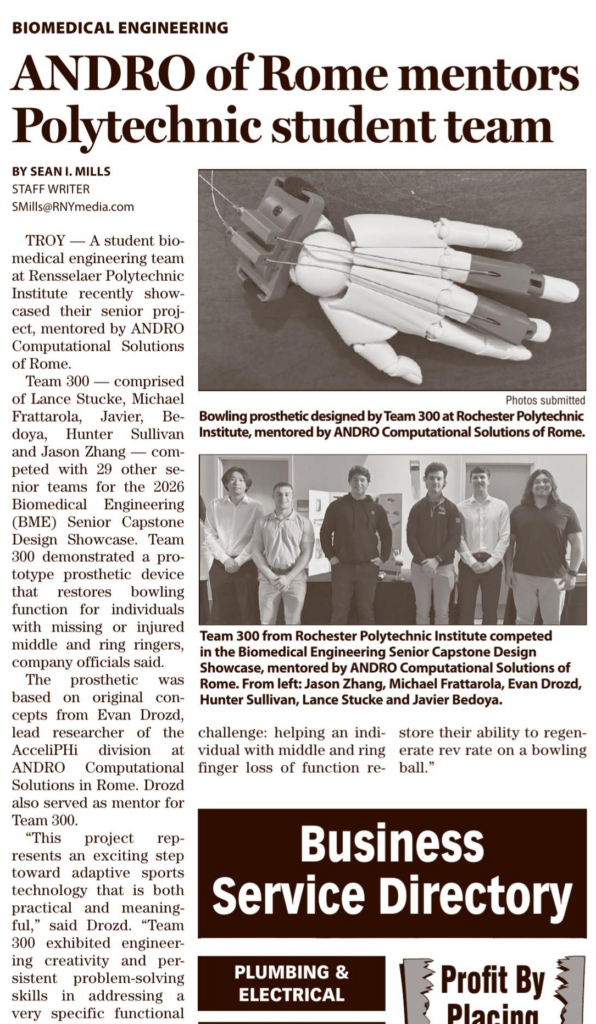
Dr. Evan Drozd, lead researcher of the AcceliPHi division at ANDRO Computational Solutions, LLC in Rome, was among a group of mentors working with RPI student teams, in this case, to adapt military-rooted AI-wireless technologies to develop an assistive prosthetic device for bowlers with permanent hand or finger injuries. Drozd also recently mentored two Syracuse University Biomedical Engineering Capstone teams, one of which was awarded the top prize for a similar type of assistive device used In sports activities but that addressed a distinct set of upper limb injuries and functional immobility.
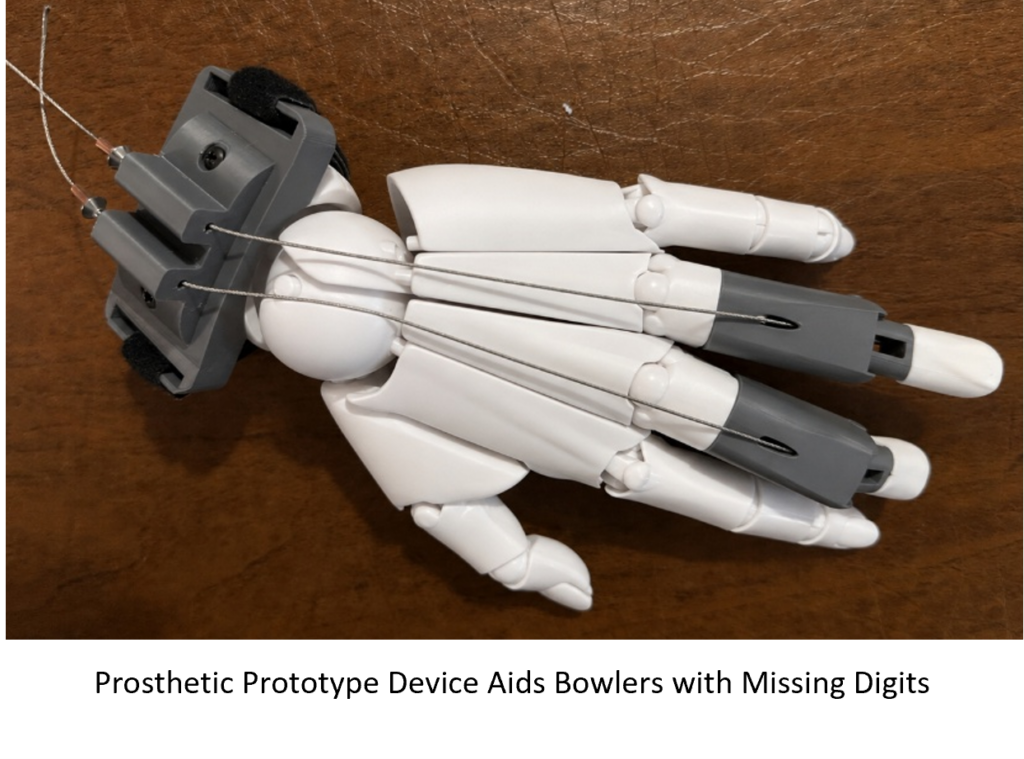
Under Drozd’s guidance, RPI’s five-member Team 300 — comprised of Lance Stucke, Michael Frattarola, Javier Bedoya, Hunter Sullivan, and Jason Zhang — successfully demonstrated a prototype of an assistive prosthetic device that restores bowling function specifically for individuals with missing middle and ring fingers.
Team 300 developed a passive mechanical prosthesis based on Drozd’s original design concept. Bowlers challenged by missing digits would be better able to regain ball contact/grip and functional control, including ball release mechanics and restore their ability to produce high rev-rate performance, allowing them to compete in leagues more effectively.
Drozd, an avid bowler, participates in several leagues throughout the year in Rome and Utica. He often runs into bowlers who struggle with the sport due to a variety of hand injuries. He wanted to develop a set of prosthetics that could enable them to compete in competitive leagues with the aid of assistive prosthetics typically configured in glove-form, as sanctioned by professional bowling associations.
AcceliPHI was formed to take certain of ANDRO’s patented Artificial Intelligence (AI) and wireless technologies developed for the military and commercialize them for a range of medical technology (medtech) uses and applications. According to Drozd, AcceliPHI is about using advanced technologies to promote or accelerate states of human health and well-being.
One of the engineering challenges in the BME Capstone project specifically addressed the ability to consistently generate rotational forces on a bowling ball when the middle and ring fingers are absent or functionally impaired. These fingers are essential in producing rev rate, controlling release timing, and creating the rotational motion needed for hook action and ball performance in competition. AI was explored for the purpose of training the prosthetic to react to hand motions but required more work to be fully implemented.
Team 300 developed two major design iterations. The first used passive wrist flexion as a mechanical driver to create finger flexion, allowing the prosthetic fingers to engage with the ball during the release phase. The second iteration explored a finger-flexion-biased passive prosthesis, designed to maintain contact and grip with the ball while helping produce rotational force during release.
“This project represents an exciting step toward adaptive sports technology that is both practical and meaningful,” said Drozd. “Team 300 exhibited engineering creativity and persistent problem-solving skills in addressing a very specific functional challenge: helping an individual with middle and ring finger loss of function restore their ability to (re)generate rev rate on a bowling ball.”
The early prototype shows the potential of what passive or active mechanical prosthetic systems can offer to restore one’s ability to participate in recreational or competitive sports. While still in a proof-of-concept stage with refinements planned, the device provides a promising foundation for adaptive sports technologies and wearables for amputees and individuals with hand or other physical impairments.
Drozd envisions that future work will focus on developing a prosthetic finger system that is durable, adjustable, and marketable. The next steps per Drozd include user testing, improving comfort and fit, implementing mechanical optimizations, assessing manufacturability, and exploring business opportunities with adaptive sports equipment outlets, medtech sales force, and prospective investors.
AcceliPHI is planned for spinoff as a separate company based in Rome within the next 12-18 months.
Drozd stated that the successful completion of the BME Capstone project reflects the value of connecting engineering students with real-world biomedical and recreational rehabilitation challenges. He added, “Through this collaboration, Team 300 demonstrated how thoughtful mechanical design can support function, independence, inclusion, and return to meaningful activity despite such challenges.”
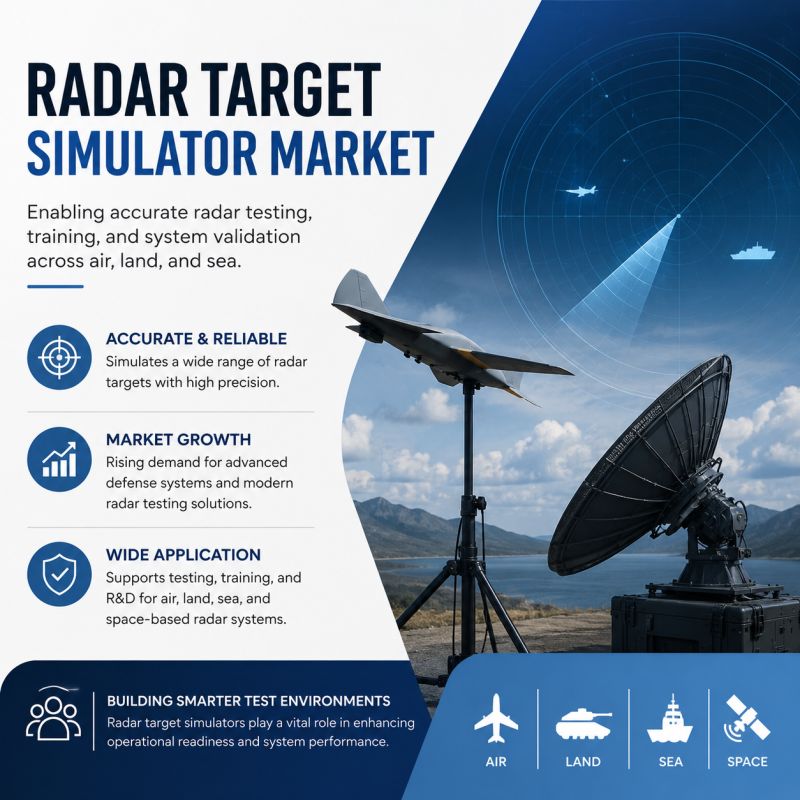
As the defense and aerospace industries continue to evolve, the demand for advanced radar simulation and electronic warfare technologies is accelerating worldwide. Recent market research projects the global Radar Target Simulator Market to grow from $1.8 billion in 2026 to $3.7 billion by 2033, representing a strong 10.8% CAGR.
We are proud to see ANDRO Computational Solutions, LLC recognized among the companies contributing to this rapidly expanding sector.
Driving Innovation in Radar & Defense Technologies
The Radar Target Simulator market is experiencing major growth due to:
Increased investment in defense modernization initiatives
Expansion of advanced electronic warfare and surveillance systems
Growing demand for high-fidelity radar simulation and testing platforms
Advancements in AI-enabled threat emulation and signal processing
Increased aerospace and autonomous systems testing requirements
Emerging trends shaping the industry include:
AI-driven threat simulation environments
Real-time multi-target emulation systems
Cloud-based radar testing and validation platforms
Enhanced interoperability across defense and aerospace systems
Applications Across Critical Sectors
Radar target simulation technologies are becoming increasingly important in:
Military training and defense readiness
Aerospace testing and validation
Naval surveillance operations
Automotive radar and autonomous vehicle development
Supporting Mission-Critical Innovation
At ANDRO, we remain committed to supporting innovative technologies that strengthen national security, advanced communications, and next-generation defense capabilities. As the industry continues to grow, collaboration between technology developers, defense partners, and research organizations will play a critical role in shaping the future of radar and electronic warfare systems.
We are honored to be included alongside organizations helping advance the future of radar simulation technologies worldwide.
We’re excited to announce that ANDRO Computational Solutions has been selected as a semifinalist in the Sourcewell Ventures Civic Solutions Challenge alongside an incredible group of innovators focused on strengthening public services and community impact.
The challenge recognizes organizations developing solutions that help communities work better through:
▪️ Stronger operations ▪️ Safer systems ▪️ Better data utilization ▪️ Improved accessibility ▪️ Modernized public services
We are honored to be recognized for our continued work supporting mission-focused technologies, advanced communications, defense innovation, and smart solutions that help organizations operate more effectively and securely.
As part of the next phase, semifinalists will present at the Smart Cities Connect Conference this September (#SCC26), where teams will showcase solutions designed to address real-world public service challenges.
Congratulations to all of the selected semifinalists, and thank you to Sourcewell Ventures for supporting innovation that drives meaningful impact for communities nationwide.
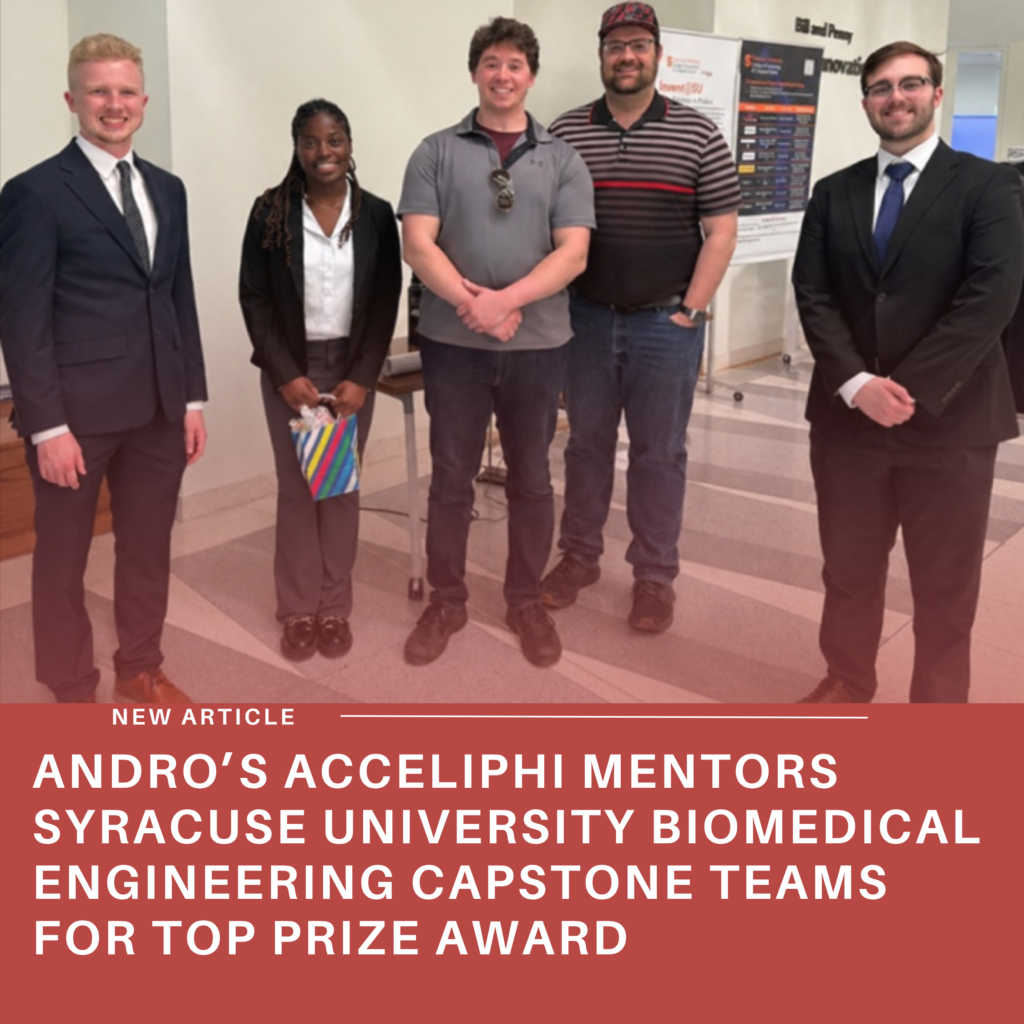
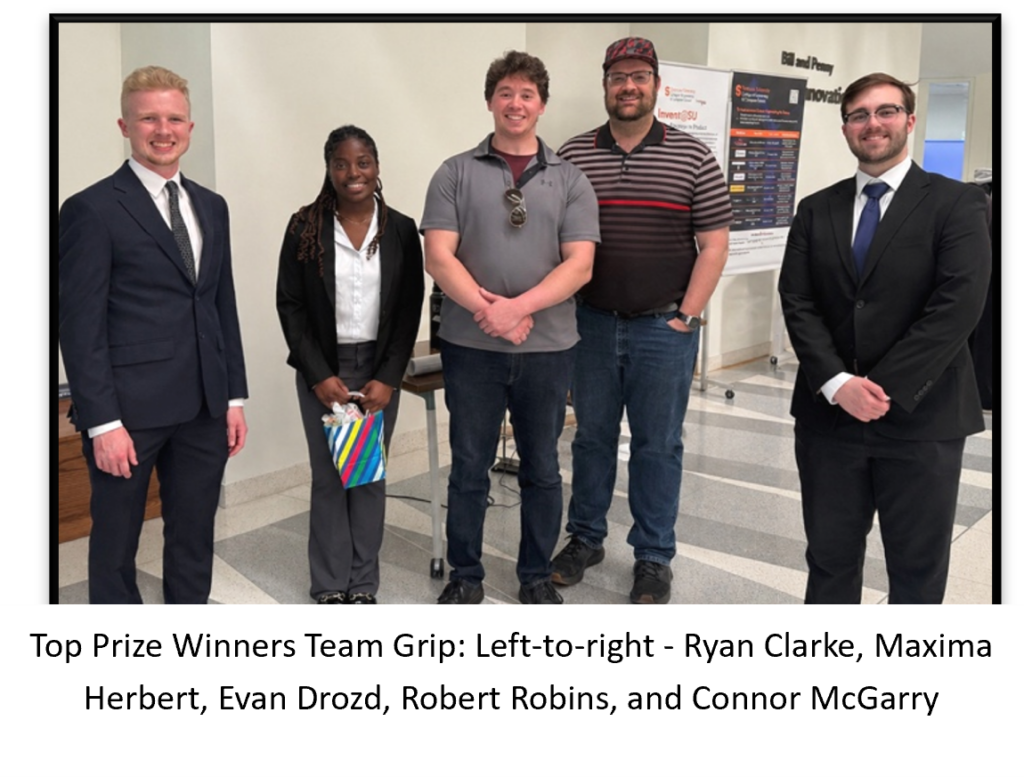
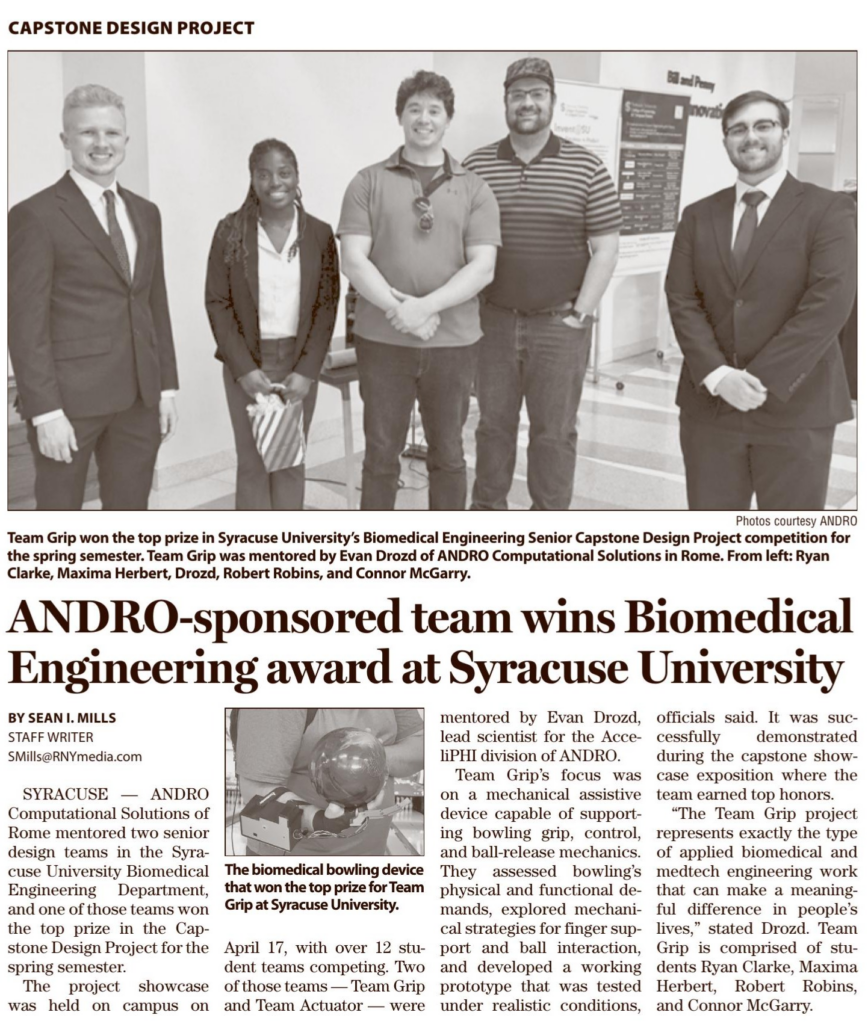
Syracuse University concluded its Biomedical Engineering Senior Capstone Design Project for the Spring semester at a showcase exposition event held at their Link Hall Atrium on April 27. The event hosted over twelve student teams competing for the Best Overall Presentation and Technology Demonstration Award. Two graduate Capstone teams—Team Grip and Team Actuator—were both mentored by Evan Drozd, Doctor of Physical Therapy (DPT) and lead scientist of the AcceliPHI division of ANDRO Computational Solutions, LLC of Rome, resulting in Team Grip receiving the top prize award.
Drozd heads AcceliPHI’s efforts to commercialize certain technologies in ANDRO’s portfolio at the intersection of wireless sensing/communications and Artificial Intelligence (AI) and to adapt them for medical technology (medtech) applications. AcceliPHI’s mission is to accelerate wellness through technology in the form of “smart” wearables and motion-assist solutions.
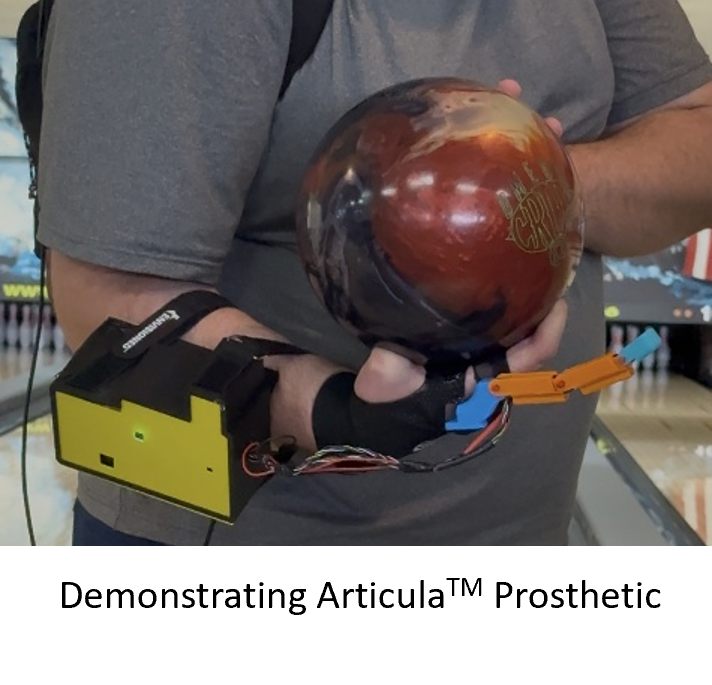
Under Drozd’s mentorship, Team Grip, consisting of Ryan Clarke, Connor McGeary, and Maxima Herbert along with Robert Robins—who helped evaluate device efficacy, successfully completed and demonstrated a proof-of-concept prosthetic finger-glove called ArticulaTM, designed to reactively restore functionality and control to bowlers missing digits or with upper-extremity imbalance. Drozd, an avid bowler himself, was inspired by the idea of a prosthetic aid that was easy to wear, affordable, and that addressed a demand for such aids in the sport of bowling. Drozd has a patent pending on the design.
Team Grip’s focus was on a mechanical assistive device capable of supporting bowling grip, control, and ball-release mechanics. They assessed bowling’s physical and functional demands, explored mechanical strategies for finger support and ball interaction, and developed a working prototype that was tested under realistic conditions. It was successfully demonstrated during the capstone showcase exposition where the team earned top honors.
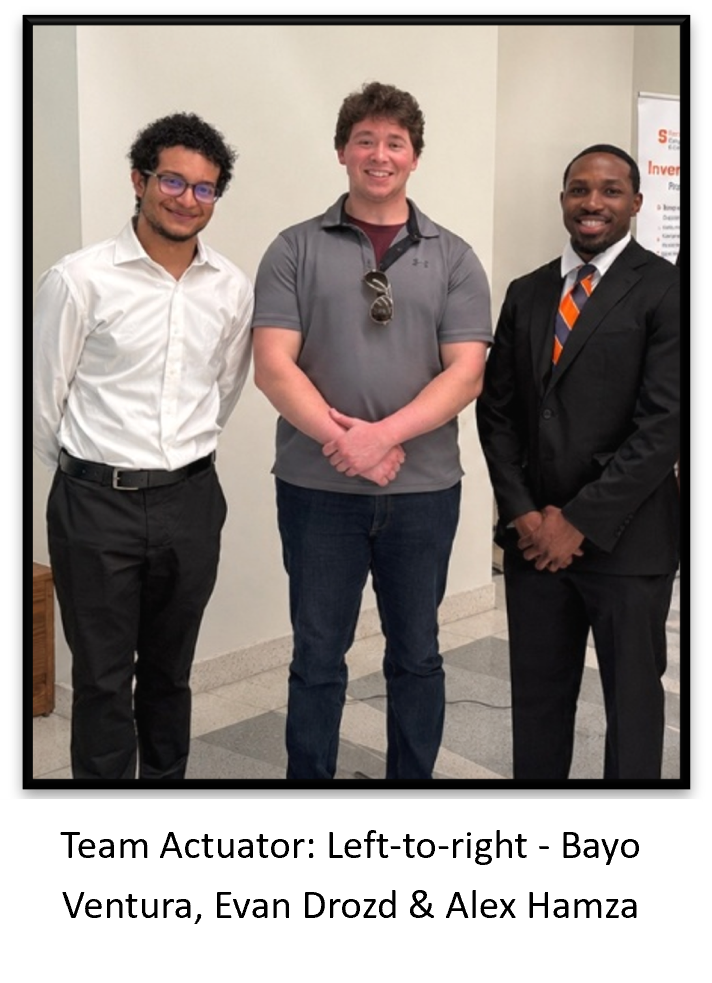
Team Actuator, comprised of Alexander Hamza and Bayo Ventura, focused had a different focus—developing a prototype actuator-assistive device intended for use in wearables and human-mobility systems. They evaluated how actuator-driven motion could be applied to rehabilitative systems, particularly those where automated controlled movement, mechanical support, and user-centered functions are essential. The original concept was based on an AI-driven electro-servomechanical actuator patent awarded to Drozd and his AcceliPHI team at ANDRO.
With ANDRO/AcceliPHI as the client and under Drozd’s direction and project leadership, the teams advanced their project from basic concept design to rapid initial experimentation and final prototyping within about 3 months.
“The Team Grip project represents exactly the type of applied biomedical and medtech engineering work that can make a meaningful difference in people’s lives,” stated Drozd. “Ryan, Connor, and Maxima demonstrated creativity, problem-solving, professionalism, and persistence in developing a device concept that could help restore access to an enjoyable activity for finger amputees and those similarly challenged.”
Drozd further added, “Team Actuator’s project represents the type of forward-thinking biomedical engineering work needed to move assistive technology into the next generation. Alexander and Bayo demonstrated strong technical curiosity, engineering discipline, and creative problem-solving while working through a challenging actuator-based design concept.”
According to Drozd, the mechanical bowling prosthetic project highlights the importance of student-led innovation in assistive technology. While still in the proof-of-concept stage, the device demonstrates the potential for future development of adaptive recreational sports equipment at an affordable price that improves quality of life, independence, participation and belonging for physically-challenged individuals.
While still in the proof-of-concept stage, Team Actuator’s work provides a foundation for future development of wearable assistive systems that may one day support individuals with musculoskeletal or neurological impairments.
AcceliPHI, currently a division of ANDRO, is planned for spinoff as a separate company based in Rome. Future work will focus on further refining both devices and bringing them to market including exploring opportunities with biomedical device manufacturers and sales teams in the Mohawk Valley region and working with potential investors and commercialization partners in the area.
Drozd and the ANDRO-AcceliPHI team extend thanks to the Syracuse University Dept. of Biomedical Engineering for the opportunity to collaborate with their capstone students on these meaningful biomedical engineering projects. Additional thanks goes to Robert Robins for providing real-world evaluation insights and ongoing feedback. Both capstone projects demonstrated how biomed and medtech engineering design can move beyond theory and into practical innovation that supports human function, mobility, and independence.
ANDRO Computational Solutions, LLC of Rome recently announced a contract award from Peraton Labs, in support of their U.S. Department of War (DoW) Advanced Spectrum Coexistence (ASC) Demonstration prime contract awarded by the National Spectrum Consortium (NSC). Under the prime contract, Peraton Labs is leading efforts to develop, deliver, and demonstrate advanced spectrum‑sharing capabilities intended to strengthen national security while fostering closer, sustained collaboration between the defense industrial base and the commercial sector. ANDRO’s support centers on developing Fifth-Generation Radio Access Network (5G RAN) software that pushes beyond current open‑source capabilities by incorporating advanced dynamic spectrum‑sharing techniques for 5G micro/small cell topologies operating in the 3.1–3.45 GHz spectrum band.
Called COALESCE, for Course-of-action Outcome Appraisal Layered EMBRSS Security Capability Enhancement, Peraton Labs’ solution will demonstrate secure coexistence of Federal and commercial wireless users in accordance with the Emerging Midband Radar Spectrum Sharing (EMBRSS) report for spectrum bands critical for U.S. military radar systems.
The ANDRO team is led by Tim Woods, Chief Information Engineer, along with the engineering team consisting of Sean Furman, Zachary Smith, and Dominic Catena. Woods stated, “Our teams’ combined work with Peraton Labs in spectrum coexistence is a critical path to demonstrating that with advanced spectrum coexistence policies, a 5G RAN can prevent harmful interference to the DoW incumbent users while simultaneously ensuring that commercial 5G cellular providers can maintain acceptable quality-of-service at scale.”
“ANDRO develops and deploys advanced spectrum technologies in cooperation with our customers and industry partners such as Peraton, to overmatch and outpace our adversaries in the domains of spectrum superiority, information dominance, and cyber assurance,” added Dr. Andrew Drozd, president of ANDRO. “We do this by complementing our partners’ capabilities to deliver superior expertise and solutions in Artificial Intelligence (AI), autonomy, and beyond 5G telecommunications technologies. We aim to support the goals of DoW spectrum sharing and coexistence of diverse systems operating together in theatre while assuring operational efficiency, resilience, and on-demand availability.”
About ANDRO: ANDRO provides research, engineering, and technical services to defense and commercial industries in advanced spectrum exploitation, secure wireless telecommunications, software-based waveform development, cognitive software-defined radio networking, multi-sensor data fusion, and sensor resource management. For more information on ANDRO, including job placements, visit www.androcs.com.
About Peraton Labs: Peraton is a next-generation technology and national security company that drives missions of consequence spanning the globe and extending to the farthest reaches of the galaxy. As one of the world’s leading mission capability integrators and transformative enterprise IT providers, Peraton delivers trusted, highly differentiated solutions and technologies to protect our nation and allies from threats across the digital and physical domains. Peraton supports every branch of the U.S. Armed Forces and serves as a valued partner to essential government agencies that sustain our way of life. Visit peraton.com to learn more.
The National Spectrum Consortium, in partnership with the United States Department of War, has awarded a $7.4 million project to the Kostas Research Institute at Northeastern University as part of the Advanced Spectrum Coexistence Demonstration.
This initiative is focused on developing and demonstrating next-generation spectrum sharing technologies—an increasingly critical capability as demand for wireless communication continues to accelerate across defense, commercial, and public sectors.
At the core of this effort is the advancement of millisecond-level spectrum sensing, enabling systems to dynamically detect, adapt, and operate within congested electromagnetic environments in real time. This level of responsiveness represents a significant step forward in ensuring efficient and secure spectrum utilization.
ANDRO Computational Solutions, LLC is proud to be selected as a key industry partner on this project, collaborating alongside leading organizations including SMA-RTY, Battelle, and zTouch Networks, Inc.
Driving Innovation Through Collaboration
This partnership brings together expertise across advanced communications, sensing technologies, and applied research to tackle one of today’s most complex technical challenges. Through this collaboration, ANDRO will contribute its capabilities in computational solutions and advanced system development to help push the boundaries of what’s possible in spectrum coexistence.
Dr. Andy Drozd, President of ANDRO Computational Solutions, was recently featured as a special guest on The Local Show to discuss one of the most rapidly evolving intersections in technology: artificial intelligence, drones, and next-generation communications networks.
In the episode titled “How AI is Changing Drones, 5G, and the Future of Communication,” Dr. Drozd shares insights into how emerging technologies are transforming the way devices communicate, how networks are managed, and how data is processed at unprecedented speeds.
During the conversation, Dr. Drozd explains how the integration of AI with advanced wireless technologies like 5G is enabling smarter and more autonomous systems—from unmanned aerial vehicles to next-generation telecommunications infrastructure. These innovations are opening the door to faster data transmission, more efficient spectrum usage, and intelligent systems capable of adapting in real time.
The discussion highlights how these technologies are not only advancing research and industry but also shaping the future of connected systems, smart infrastructure, and global communications networks.
Drones and other unmanned aerial systems increasingly rely on high-speed wireless networks and intelligent algorithms to process large amounts of data quickly and operate safely in complex environments. Research across the telecommunications field shows that combining AI with 5G networks allows devices to analyze data, optimize performance, and respond dynamically to changing conditions, helping support applications ranging from security monitoring to emergency response and infrastructure inspection.
As President of ANDRO, Dr. Drozd continues to contribute to the advancement of wireless communications and emerging technologies, helping shape the next generation of digital connectivity.
Watch the full interview below to learn more about how AI, drones, and advanced wireless systems are redefining the future of communication.
During downtime, I work with my incredibly motivated teammates to publish when feasible. This one is all kudos to Sabarish Krishna Moorthy “Survey of Graph Neural Network for Internet of Things and NextG Networks,” which has officially been published in IEEE Communications Surveys And Tutorials !
As we transition towards 6G and navigate an increasingly dense IoT landscape, the complexity of our network structures is exploding. In this evolving ecosystem, Graph Neural Networks (GNNs) occupy a unique and pivotal position, offering a distinct set of advantages—and specific challenges. Our paper dives deep into Graph Neural Networks (GNNs) in the context of NextG.
Key highlights of our survey include: IoT & Data Fusion: How GNNs handle multi-sensor data and enhance network intrusion detection. Spectrum Awareness: State-of-the-art GNN applications in RF spectrum sensing and signal classification. NextG Networking: Tackling routing optimization, congestion control, and Digital Twins. Tactical Systems: Applying these frameworks to mission-critical sensing and communication.
We also outline a roadmap for the open challenges ahead, from privacy-preserving frameworks to zero-touch network management. If you’re working in AI-enabled wireless communications or IoT, I hope you find this survey a valuable resource for your own research.
ROME, N.Y. — Upon completing a competitive prototype demonstration for U.S. Special Operations Command (USSOCOM), ANDRO Computational Solutions, LLC of Rome was selected as one of multiple awardees under an Other Transactions (OT) prototype agreement that will integrate Artificial Intelligence and Machine Learning (AI/ML) capabilities into the Tactical Assault Kit (TAK) technology base.
Following the prototype demonstration for the TAK effort, the government program office and operational stakeholders conducted an in-depth review and evaluation of the demonstration. ANDRO was determined to be successful in the TAK prototype system to develop and deliver an AI/ML solution as a functional software capability. The functionality demonstrations and supporting deliverables were deemed to reflect the maturity of the capability and technology and its operational utility for the intended purpose. ANDRO’s solution further validated the efficacy of the design and manufacturing process. As a result of the successful completion of the prototype demonstration and meeting the requirements for an OTA award, ANDRO was selected for eligibility to receive a production contract.
ANDRO president Dr. Andy Drozd stated, “The USSOCOM prototype agreement takes ANDRO a large step closer in achieving our strategic plan to produce highly effective products enhancing our nation’s security, become a leader in TAK advancement for military and commercial use, and to continue to expand our operations and footprint locally and across the Government.”
ANDRO Computational Solutions, LLC, founded in 1994, is a leader in the application of AI/ML for wireless communications, command, control, cyber, and computing for intelligence, surveillance, and reconnaissance (ISR) system applications, servicing both military and commercial customers. The company also leads in the development of innovative software-based waveform development solutions for software-defined radio (SDR) interoperability and related applications. Additionally, ANDRO has developed novel Sensor Resource Management (SRM) capabilities for midcourse ballistic threat tracking. The company is headquartered in Rome with field offices in Syracuse, Troy, Dayton-Ohio, and San Diego-California.
Approved for Distribution by USSOCOM Public Affairs