
AI Innovation Lab

ANDRO Marconi-Rosenblatt Artificial Intelligence Innovation Lab

In 2019 ANDRO launched the Marconi-Rosenblatt Artificial Intelligence Innovation Lab, named in honor of Guglielmo Marconi and Frank Rosenblatt, two pioneers notable in the fields of radio communications and artificial intelligence, respectively. The lab will focus on applying artificial intelligence solutions for next-generation wireless networking to advance the state of the art in Internet-of-Things technologies, space communications and other customer applications. The pioneering solutions will also be applied to natural language processing, speech recognition, computer vision, big-data analytics, brain-computer interfaces and intelligent solutions for a better AI-enabled future. The lab’s applied research will directly impact healthcare, education, transportation, security, smart cities, and defense markets among others. 

What do we do?

Beyond 5G

UAV, AI, and Zero Trust Inspired Next-generation Network Optimization

Intelligent Mesh Networking

Reinforcement learning-based mesh networking for terrestrial, aerial, and space networks

Safe AI

Approaches for online planning problem to utilize safety and utility simultaneously

Autonomous UAVs

Artificial neural network and reinforcement learning enabling autonomous flight control for UAVs

Jammer Resilient Communication

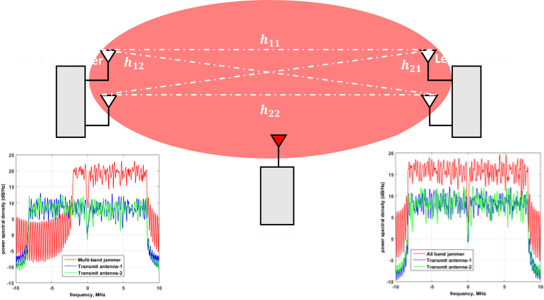
MIMO-beamforming techniques along with hybrid adaptive link layer for Jammer-resilience

RF Signal Intelligence

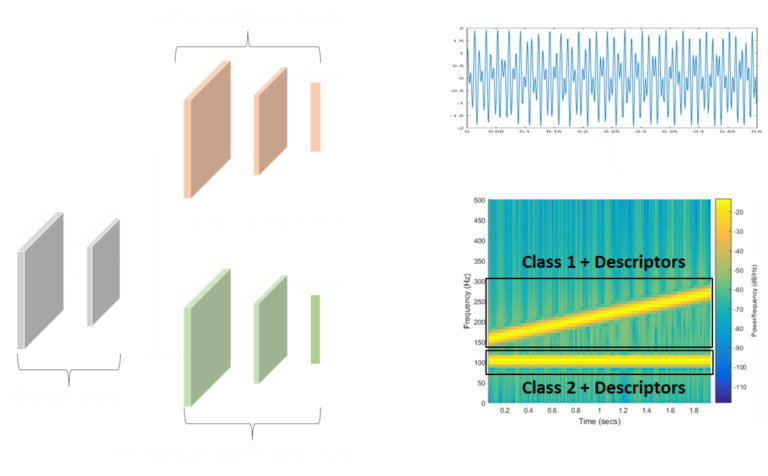
Multi-task learning framework for radio frequency signal classification and characterization

Latest AI News

  • New Marconi-Rosenblatt AI Innovation Lab Publication: IEEE Communications Surveys And Tutorials

    🚀 New Marconi-Rosenblatt AI Innovation Lab Publication: IEEE Communications Surveys And Tutorials 🚀During downtime, I work with my incredibly motivated teammates to publish when feasible. This one is all kudos to Sabarish Krishna Moorthy"Survey of Graph Neural Network for Internet of Things and NextG Networks," which has officially been published in IEEE Communications Surveys And Tutorials !As we transition towards 6G and navigate an increasingly dense IoT landscape, the complexity of our network structures is exploding. In this evolving ecosystem, Graph Neural Networks (GNNs) occupy a unique and pivotal position, offering a distinct set of advantages—and specific challenges. Our paper dives deep into Graph Neural Networks (GNNs) in the context of NextG.Key highlights of our survey include:IoT & Data Fusion: How GNNs handle multi-sensor data and enhance network intrusion detection.Spectrum Awareness: State-of-the-art GNN applications in RF spectrum sensing and signal classification.NextG Networking: Tackling routing optimization, congestion control, and Digital Twins.Tactical Systems: Applying these frameworks to mission-critical sensing and communication.We also outline a roadmap for the open challenges ahead, from privacy-preserving frameworks to zero-touch network management. If you’re working in AI-enabled wireless communications or IoT, I hope you find this survey a valuable resource for your own research.🔗 Read the full...
  • ANDRO Awarded Army Contract to Develop AI Capabilities for Advanced Electronic Warfare and Signals Intelligence
    ROME, N.Y. — ANDRO Computational Solutions, LLC of Rome has been awarded a multimillion U.S. Army CPE IEW&S contract to advance Artificial Intelligence and Machine Learning (AI/ML) readiness through the generation of high-fidelity synthetic radio frequency (RF-Gen) datasets to enhance the operational capabilities in electronic warfare (EW) and signal intelligence (SIGINT) domains. RF-Gen leverages state-of-the-art generative AI models to produce high-quality synthetic RF datasets that replicate realistic radio frequency environments, including complex interference and contested spectrum conditions. The datasets are crucial for training and evaluating AI/ML models designed for modern EW and SIGINT systems. By creating data-rich, controlled, and secure simulation environments, RF-Gen ensures that mission-critical algorithms can be trained and tested without depending on expensive real-world RF data collection systems that may be limited or restricted in the manner or type of data acquired. The project, titled, “RF-Gen: AI/ML-Ready Synthetic RF Data,” is being led by ANDRO’s Marconi-Rosenblatt AI Innovation Lab under the direction of Co-Principal Investigators Dr. Jithin Jagannath, Chief Scientist – Chief Technology Officer and Dr. Anu Jagannath, Chief Scientist – Chief Research Officer. The work directly supports the Army’s Project Linchpin initiative that is focused on delivering trusted AI/ML capabilities enabling rapid development, integration, and deployment of advanced...
  • Dr. Jithin Jagannath Appointed to the IEEE Internet of Things Journal Editorial Board

    We are proud to share that Dr. Jithin Jagannath, Founding Director of the Marconi-Rosenblatt AI Innovation Lab and Chief Technology Officer at ANDRO Computational Solutions, LLC, has been invited to join the IEEE Internet of Things Journal (IoT-J) Editorial Board. Launched in 2014 and chronicled in its “Genesis of the IoT-J”, the IEEE IoT Journal is a premier publication advancing the state of the art in the rapidly evolving Internet of Things landscape. The journal publishes original research articles and authoritative reviews on all aspects of IoT, including system architecture, enabling technologies, communication protocols, services and applications, and the societal impacts of IoT adoption. Topics in the journal span a wide range of critical IoT domains, such as: IoT Architectures: Things-centric, data-centric, and service-centric designs; CPS and SCADA platforms; cloud-based IoT; future internet design; and system security and manageability. Enabling Technologies: Advanced sensors, RFID, low-power and energy-harvesting devices, machine-type communications, real-time systems, IoT data analytics, embedded software, and in situ processing. Services & Applications: Smart cities, smart environments, and smart homes; streaming data management and mining platforms; service middleware; open service platforms; semantic service management; security and privacy protocols; and IoT test-beds and standards. Dr. Jagannath’s expertise in advanced wireless systems, AI/ML integration in IoT, low-power...
  • U.S. Army Selects ANDRO’s Marconi-Rosenblatt AI Innovation Lab for Cyber Quest 2025
    ROME, N.Y. — ANDRO Computational Solutions, LLC, a leader in advanced technology solutions, has been selected by the U.S. Army to participate in Cyber Quest 2025, an Army Focused Warfighting Experiment (AFWE). This allows the team to conduct Soldier Touch Point (STP) experiments for its cutting-edge, AI-driven electronic support (ES) technology, DeepSPEC®. DeepSPEC® and related solutions, developed by the Marconi-Rosenblatt AI Innovation Lab, leverage state-of-the-art artificial intelligence to deliver electronic warfare at the edge. The technology is designed to provide enhanced situational awareness, streamline electronic operations, and improve the effectiveness of Army forces in complex environments. As part of the Army’s Cyber Quest 2025 initiative, DeepSPEC will undergo a series of critical field trials in real-world STP experiments, allowing the U.S. Army to assess its impact on operational effectiveness and battlefield performance. The execution team includes Zackary Kane, Noor Biswas, Justin Henney and Dr. Anu Jagannath. "We are honored to have been selected by the U.S. Army for this experimentation opportunity," said Dr. Jithin Jagannath, Chief Scientist and CTO of ANDRO Computational Solutions, LLC. "The integration of our DeepSPEC technology into STP experiments marks a significant milestone in the advancement of AI-driven EW solutions. We look forward to working closely with...
DeepSPEC®

DeepeRFind

DeepForecaster

DeepLink®

Wi5G

Zero Trust for B5G

Digital Twin for B5G

ARROWLink®

Jammer-resilient LPI/D Waveform

SPEARLink®

HELPER Network

RANGER

D-MARVEL

MR-iNet

RadarCommDataset

AI for Wireless

Select Publications

A. Jagannath, Z. Kane, J. Jagannath, “RF Fingerprinting Needs Attention: Multi-task Approach for Real-World WiFi and Bluetooth” in Proc. of IEEE Global Communications Conference (GLOBECOM), Rio de Janeiro, Brazil, December 2022.

A. Jagannath, J.Jagannath, T. Melodia, ”Redefining Wireless Communication for 6G: Signal Processing Meets Deep Learning with Deep Unfolding”, IEEE Transactions on Artificial Intelligence, vol. 2, no. 6, pp. 528-536, Dec. 2021. [Download]

J. Jagannath, K. Hamedani, C. Farquhar, K. Ramezanpour, A. Jagannath, “MR-iNet Gym: Framework for Edge Deployment of Deep Reinforcement Learning on Embedded Software Defined Radio”, in Proc. of ACM Workshop on Wireless Security and Machine Learning (WiseML), San Antonio, Texas, USA May, 2022. [Best Paper Award] [Download]

A. Jagannath, J. Jagannath, “Multi-task Learning Approach for Modulation and Wireless Signal Classification for 5G and Beyond: Edge Deployment via Model Compression”, Physical Communications (Elsevier), vol. 54, 101793, ISSN 1874-4907, 2022. [Download]

J. Jagannath, K. Ramezanpour, A. Jagannath, “Digital Twin Virtualization with Machine Learning for IoT and Beyond 5G Networks: Research Directions for Security and Optimal Control”, in Proc. of ACM Workshop on Wireless Security and Machine Learning (WiseML), San Antonio, Texas, USA May, 2022. [Download]

Select Projects

DeepSPEC®

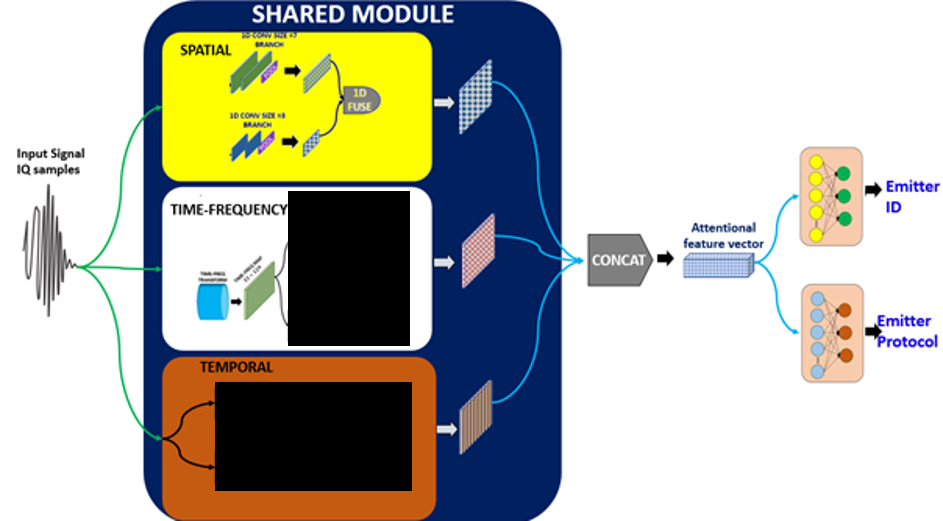
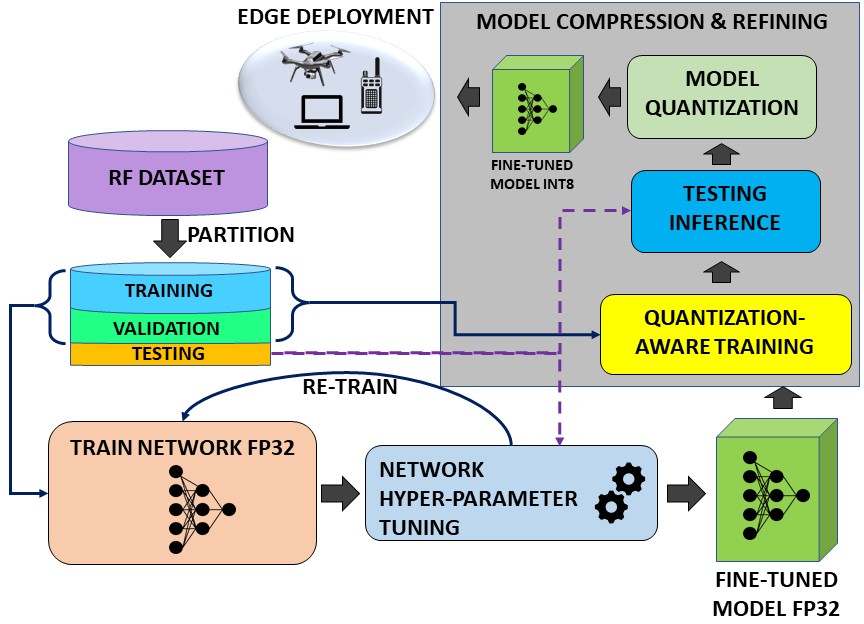
Efficient Multi-task Machine Learning for Signal type and Modulation Classification for Edge Deployment

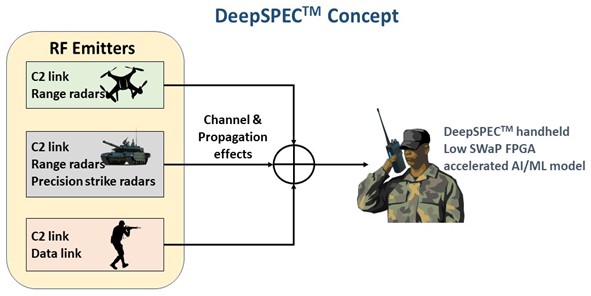
Tactical systems are often presented with an amalgam of RF signals emanating from friendly, hostile and neutral sources. Blind signal identification techniques that can identify RF signals without any prior knowledge can play a significant role in enhancing the spectrum visualization. Such blind signal identification techniques would need large datasets to learn the inherent signal characteristics to allow a SIGINT system to accurately classify the signal. To surpass this hurdle, we use the powerful AI tool, “Deep Convolutional Neural Network (DCNN)” to extensively train, test and validate on large RF datasets. The SIGINT module are usually mounted as an adjunct to the tactical systems or as a portable device that can be carried by the operators or mounted on their vest and therefore, it is ideal for them to be of small form-fit, efficient in power consumption, and offer real-time performance. DeepSPEC® offers:

  • Power Efficient Hardware Acceleration

    The widely used GPU accelerators consume large amount of power, therefore, their operation in low SWaP devices becomes challenging. On the other hand, FPGA based accelerators are gaining momentum for low SWaP platforms due to their higher power efficiency (i.e., performance per Watt), parallelism for real-time performance, reconfigurability, and low development cost. Ensuring the performance on FPGA relies on algorithmic optimization techniques such as bit width optimization, selective network pruning, weight quantization, loop-level parallelism, memory access, among others.

  • Diverse RF Signal Types

    An advanced SIGINT system must be able to handle and identify a vast and diverse class of tactical LPI/LPD (soldier radio waveforms, wideband networking waveforms, among others), general communication, and jammer signals to present a clear spectrum situational awareness. Such a rich and diverse RF environment will require a powerful tool such as that offered by AI to identify the myriad waveforms under a range of operational scenarios.

  • Advanced, Extensible, Blind Signal Analysis

    Above all, the SIGINT system will have no prior knowledge of the RF signals under consideration. With increasing advancements in signal processing, the tactical systems continue to adopt enhanced waveforms to strive in the challenging operational scenarios. Thus, a SIGINT system for the evolving combat scenarios must be able to accommodate new RF signal types, perform blind signal identification and analysis to portray the hidden features of the incident RF signal.

  • COTS-based Open Architecture

    The RF waveforms of tactical systems are continuously evolving, and an inflexible architecture will soon become outdated due to the inability to handle modern signal types. Therefore, a SIGINT device must be reconfigurable to allow affordable future waveform inclusion with ease and possess an open architecture to allow seamless integration to legacy systems.

The proof-of-concept of DeepSPEC® was established and following are the key accomplishments:

DeepeRFind

RF Fingerprinting Approach for Commercial IoT Devices

Situational awareness and understanding the battlespace is a fundamental enabler across all tactical systems. To this end, DeepeRFind is being designed to be a small form-fit, multi-task Machine Learning (ML) based fingerprinting device. DeepeRFind: Sensitivity Enhancing Radio Frequency Fingerprinting Technique using Deep Learning – which performs a comprehensive RF fingerprinting scheme with emphasis on enhancing receiver sensitivity. DeepeRFind is envisioned to – mitigate adversarial spoofing/masquerading, enable confidential communication, enhanced situation awareness by extracting the hardware specific signatures enabling emitter recognition by low SWaP-C embedded platforms.

DeepForecaster

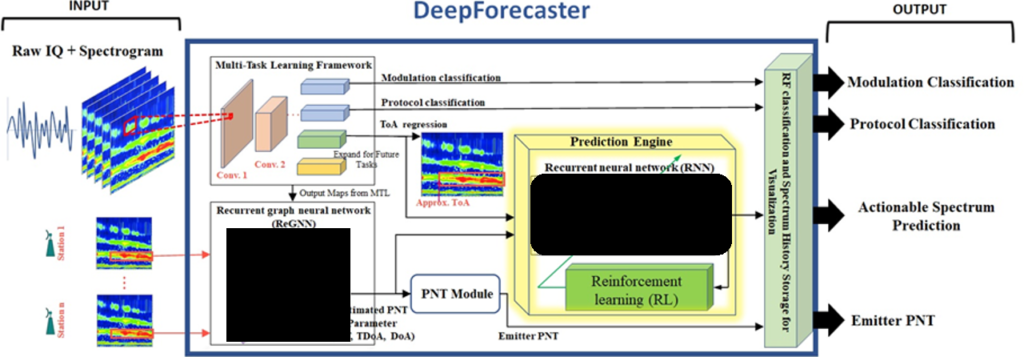
Comprehensive SIGINT for RF Signal Detection, 3D Localization, and Behaviors Prediction

DeepForecaster is being developed to be a comprehensive SIGINT unit that performs multiple SIGINT tasks under one hood. The all-in-one functionality is achieved with superior AI engine that processes raw IQ samples from the radio frontend. DeepForecaster is envisioned to provide precise PNT, signal identification/classification, emitter tracking, and radio environment modeling under a severe dynamic EM environment. Another main task of DeepForecaster is to self-learn to predict the spectrum behavior to provide actionable information regarding upcoming spectrum usage. DeepForecaster will be designed to operate seamlessly and track/geolocate the interference sources in a GPS denied environment – rendering it ideal for tactical setting.

DeepLink®

Reinforcement learning for real-time wireless resource allocation

Embedded Machine Learning for autonomous SDR transmission parameter control based on situational awareness.

5G and Beyond

Select Publications

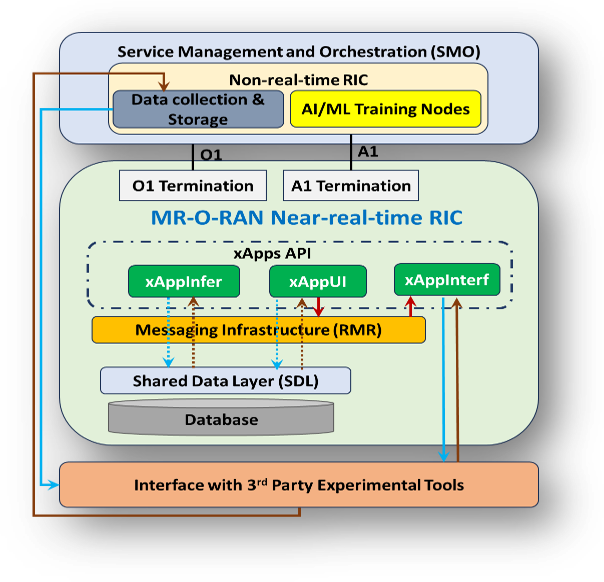
K. Ramezanpour, J. Jagannath, “Intelligent Zero Trust Architecture for 5G/6G Networks: Principles, Challenges, and the Role of Machine Learning in the context of O-RAN”, Computer Networks (Elsevier), vol. 217, 109358, ISSN 1389-1286, 2022.

A. Jagannath, J. Jagannath, “Multi-task Learning Approach for Modulation and Wireless Signal Classification for 5G and Beyond: Edge Deployment via Model Compression”, Physical Communications (Elsevier), vol. 54, 101793, ISSN 1874-4907, 2022. [Download]

K. Ramezanpour, J. Jagannath, A. Jagannath, “Security and Privacy vulnerabilities of 5G/6G and WiFi 6: Survey and Research Directions from a Coexistence Perspective”, Computer Networks (Elsevier), arXiv preprint arXiv:2206.14997, 2022. 

J. Jagannath, K. Ramezanpour, A. Jagannath, “Digital Twin Virtualization with Machine Learning for IoT and Beyond 5G Networks: Research Directions for Security and Optimal Control”, in Proc. of ACM Workshop on Wireless Security and Machine Learning (WiseML), San Antonio, Texas, USA, May, 2022. [Download]

Select Projects

Wi5G

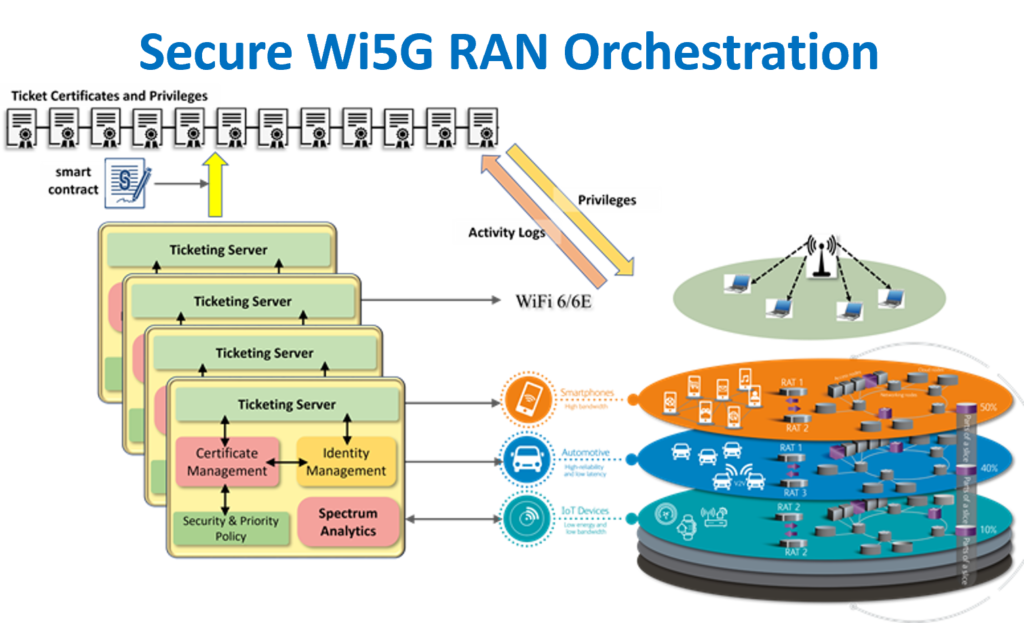
Secure Spectrum Coexistence Technology for 5G and WiFi6

Project Wi5G aims to design novel technology to sustain secure, fair, collaborative, spectrum efficient WiFi 6/6E and 5G cellular coexistence. Wi5G is a software abstracted secure RAN orchestrator that leverages the 3GPP standardization features to enable harmonious coexistence with WiFi networks. Wi5G is primarily designed to enable interoperability and accelerated adoption capabilities by legacy systems as well as standalone 5G architectures. Wi5G ensures secure and tokenized spectrum sharing to ensure subscriber privacy and prevent unauthorized user access. Wi5G is a realization of cognitive capability deployment at the network edge. Wi5G foresees immense commercialization potential and estimates a large customer base from the Federal as well as commercial sector for smart city, Industry 4.0, uninterrupted connectivity at public WiFi hotspots, etc.

Zero Trust for B5G

Intelligent zero trust architecture for 5G/6G networks

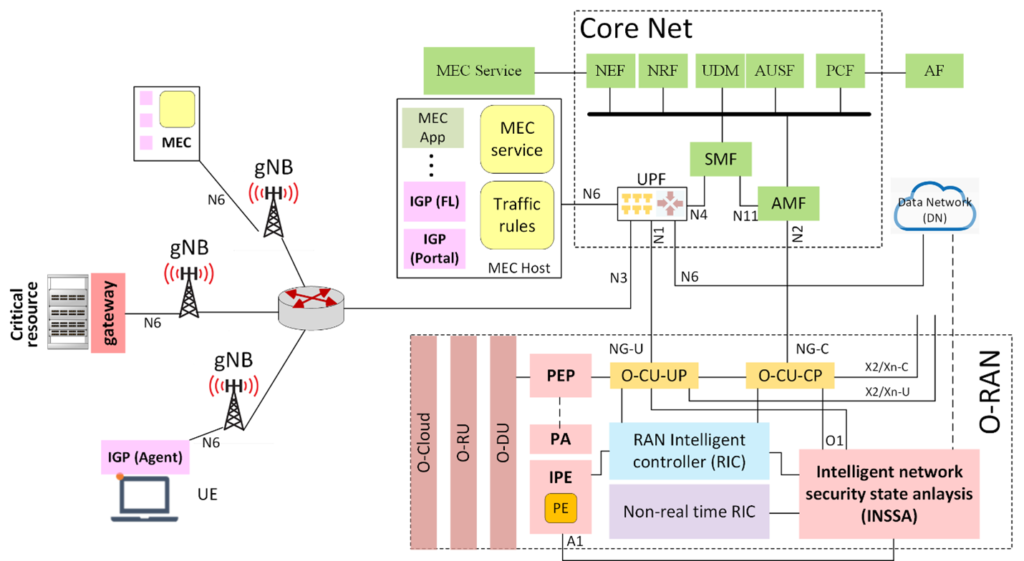
Fifth-generation (5G) wireless networks are expected to handle a large volume of data generated by a wide range of devices including smartphones, autonomous vehicles, smart buildings, cities, and infrastructure. The members of society nowadays have their personal sensitive data stored on servers throughout the network and rely on the various access points to avail network-based services and applications. More importantly, the operation of future critical technologies such as autonomous vehicles, smart grids and emergency systems, that deal with public safety and national security, highly rely on network-based data management and processing. Zero trust architecture (ZTA) is an emerging and necessary framework for cybersecurity to provide the privacy and security of personal and sensitive data in such dynamic environment, which is also introduced by the U.S. Department of Defense (DoD) as the basis for next generation security systems. To the best of our knowledge, this is the first work that discusses how zero trust principles can become the driving force in ensuring security for future wireless networks (5G/6G). In addition, we introduce an O-RAN compliant conceptual intelligent ZTA framework based on artificial intelligence (AI) engines and discuss how the existing AI algorithms can be exploited to realize the premises of a ZTA.

Digital Twin for B5G

Digital Twin Virtualization with Machine Learning for IoT and 5G/6G Networks

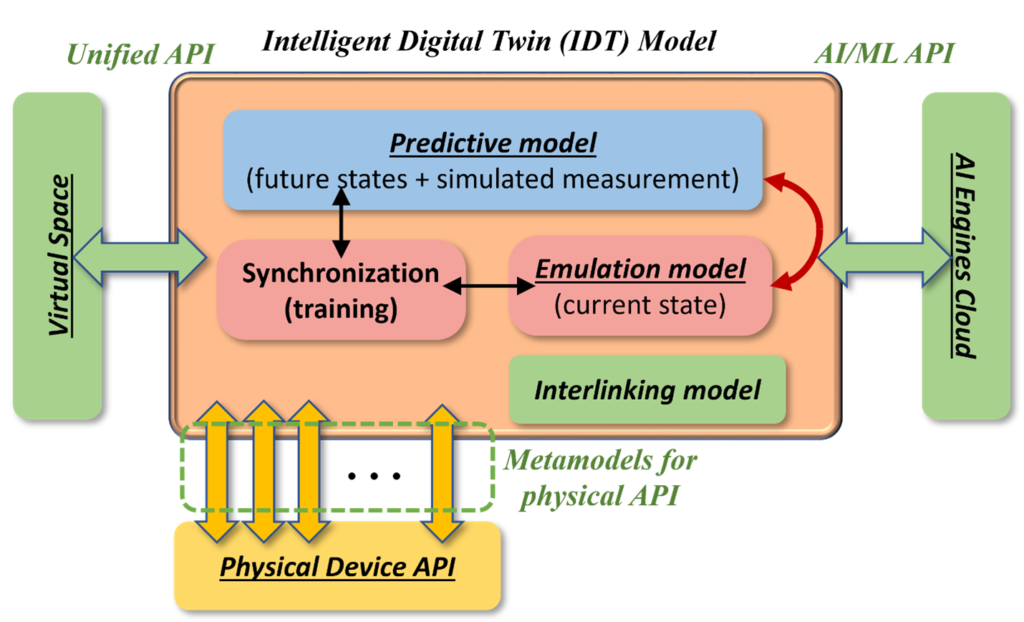
Digital twin (DT) technologies have emerged as a solution for realtime data-driven modeling of cyber physical systems (CPS) using the vast amount of data available by Internet of Things (IoT) networks. In this position paper, we elucidate unique characteristics and capabilities of a DT framework that enables realization of such promises as online learning of a physical environment, real-time monitoring of assets, Monte Carlo heuristic search for predictive prevention, on-policy, and off-policy reinforcement learning in real-time. We establish a conceptual layered architecture for a DT framework with decentralized implementation on cloud computing and enabled by artificial intelligence (AI) services for modeling and decision-making processes. The DT framework separates the control functions, deployed as a system of logically centralized process, from the physical devices under control, much like software-defined networking (SDN) in fifth generation (5G) wireless networks. To clarify the significance of DT in lowering the risk of development and deployment of innovative technologies on existing system, we discuss the application of implementing zero trust architecture (ZTA) as a necessary security framework in future data-driven communication networks.

Advanced Signal Processing & Networking

Select Publications

A. Jagannath, J. Jagannath, A. Drozd “High Rate-Reliability Beamformer Design for MIMO-OFDM System under Hostile Jamming”, in Proc. of 29th International Conference on Computer, Communication and Networks (ICCCN), Honolulu, HI, USA, Aug, 2020. [Download]

A. Jagannath, J. Jagannath, A. Drozd, “Towards Higher Spectral Efficiency: Rate-2 Full-Diversity Complex Space-Time Block Codes,” in Proc. of IEEE Global Communications Conference (GLOBECOM), Waikoloa, HI, USA, December 2019. [Download]

J. Jagannath, A. Jagannath, J. Henney, T. Gwin, Z. Kane, N. Biswas, A. Drozd, “Design of Fieldable Cross-Layer Network using Embedded Software Defined Radios: Survey and Novel Architecture with Field Trials”, Computer Networks (Elsevier), vol. 209, 108917, ISSN 1389-1286, 2022. [Download]

J. Jagannath, A. Jagannath, J. Henney, N. Biswas, T. Gwin, Z. Kane, A. Drozd, “Fieldable Cross-Layer Optimized Embedded Software Defined Radio is Finally Here!”, in Proc. of IEEE Conference on Military Communications (MILCOM), San Diego, CA, USA, Nov 2021. [Download]

Select Projects

ARROWLink®

Adaptive Radio for RObotic Warfare (ARROW)

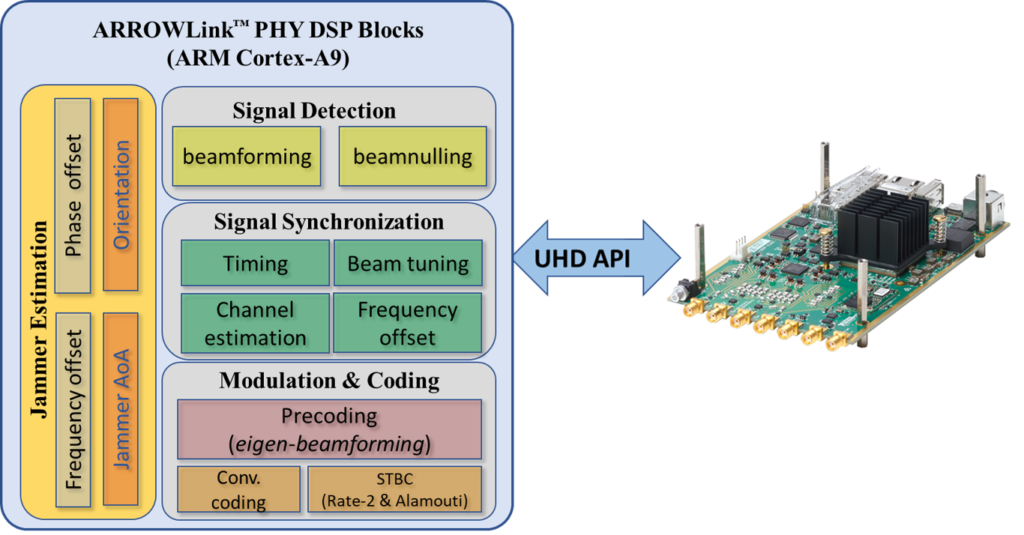
Undeterred wireless communication is the key to every successful mission. From deployed troops to law enforcement officials, lack of reliable communication increases risk and compromises safety. These challenges are further exacerbated when unmanned ground robot vehicles are operated in urban scenarios with severe multipath due to cluster of buildings along with active transmissions from unfriendly jammers. A cognitive communication system must be able to adapt to contested operating environment and mitigate interferences from nearby parallel operating radios, intentional hostile jamming, and multipath fading effects. The SDR communication system can be leveraged to provide agility to the radio in terms of operating frequency, temporal-spatial diversity, transmission rate and power to suit the varying operational requirements and channel conditions. To ensure reliable communication, ANDRO’s MR Lab has designed and developed ARROWLink® with adaptive MIMO-MANET to sustain communications in contested tactical environment.

The proof-of-concept was established with following key accomplishments:

Demonstration of Jammer-resilient LPI/D Waveform

Team has Demonstrated a jammer resilient physical layer with low probability of intercept/detection (LPI/D) properties on an embedded software defined radio (SDR) testbed. The entire LPI/D Direct Sequence Code Division Multiple Access (DS-CDMA) physical layer is executed on ARM Cortex-A57 processor of an SDR. To accomplish this, the physical layer software design adopts a multi-threading architecture with several optimizations in memory accesses to minimize processing time of the receiver and maximize sampling rate. To suppress narrowband jammers, we implement and compare two methods of supervised and semi-supervised auxiliary vector filtering. We demonstrate the LPI/D and jammer resiliency properties of the software-defined DS-CDMA physical layer by real-time streaming of a video in the presence of a strong OFDM signal modeling a narrowband jammer.

SPEARLink®

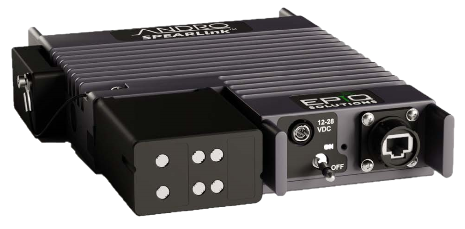
Developed by ANDRO’s Marconi-Rosenblatt Innovation Lab, SPEARLink® is the first of its kind patented energy-aware mesh networking solution designed using embedded software-defined radio. A scalable solution that allows you to add and remove radios to the network with ease. SPEARLink® mesh network supports AES encrypted information exchange.

Ruggedized and weatherized design built for outdoor deployment. The product comes with a Graphical User Interface (GUI) that provides a single point of remote monitoring and control of the units. It can be used to monitor location, check the health status of the radios, battery levels, and change parameters like data rate, transmission power remotely.

Check out the SPEARLink® Product Page for more information on the hardware and inquiries to purchase SPEARLink®!

HELPER Network

ANDRO’s Heterogeneous Low PowEr Radio (HELPER) Network is a low cost, low SWaP, intelligent IoT device that is enabling next generation smart city solutions by elevating proprietary energy-aware cross-layer routing protocol.

Check out the HELPER Network dedicated page for more information on HELPER!

Autonomy for Unmanned Systems

Select Publications

N. Polosky, BC. da Silva, M. Fiterau, J. Jagannath, “Constrained Offline Policy Optimization”, in Proc. of the 39th International Conference on Machine Learning (ICML), Baltimore, MD, July, 2022.

J. Jagannath, A. Jagannath, S. Furman, T. Gwin, “Deep Learning and Reinforcement Learning for Autonomous Unmanned Aerial Systems: Roadmap for Theory to Deployment” in Deep Learning for Unmanned Systems. Studies in Computational Intelligence, Koubaa A., Azar A.T. (eds), vol 984. Springer, Cham., 2021. [Download]

N. Polosky, T. Gwin, S. Furman, P. Barhanpurkar, J. Jagannath, “Machine Learning Subsystem for Autonomous Collision Avoidance on a small UAS with Embedded GPU”, in Proc. IEEE International Workshop on Communication and Networking for Swarms Robotics, 2022. [Download]

Select Projects

RANGER

AI for Enhancing Autonomous Manned Unmanned Teaming (MUM-T)

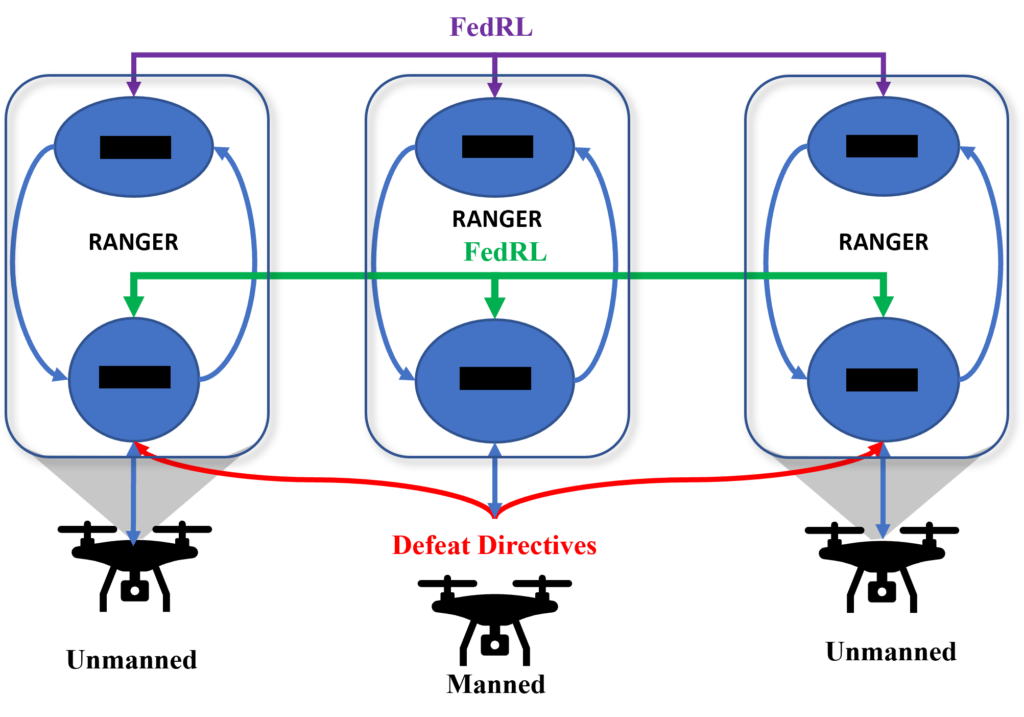
RANGER is envisioned to be a modular software solution designed to increase mission efficiency and survivability by adapting negation techniques on-the-fly in response to dynamic enemy radar behavior. RANGER agents (manned and unmanned units) are equipped with multi-task learning-based counter-radar intelligence module that provides agents with a common electromagnetic operating picture and an intelligent radar defeat engine that computes both single agent and coordinated defeat methods tailored to the specific threat. Operating in conjunction with the two previous modules is RANGER’s federated learning technique, enabling fast adaptation and behavior change to varying mission conditions, which provides the framework with the requisite battlefield agility to defeat the dynamic radar networks of the future.

D-MARVEL

Technology to Enhance UAS Autonomy and Collision Avoidance through Machine Vision

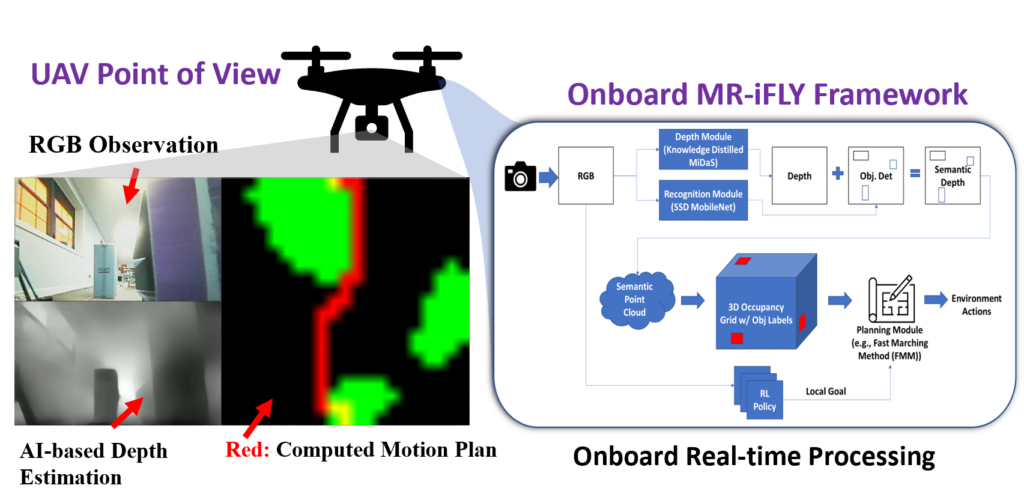
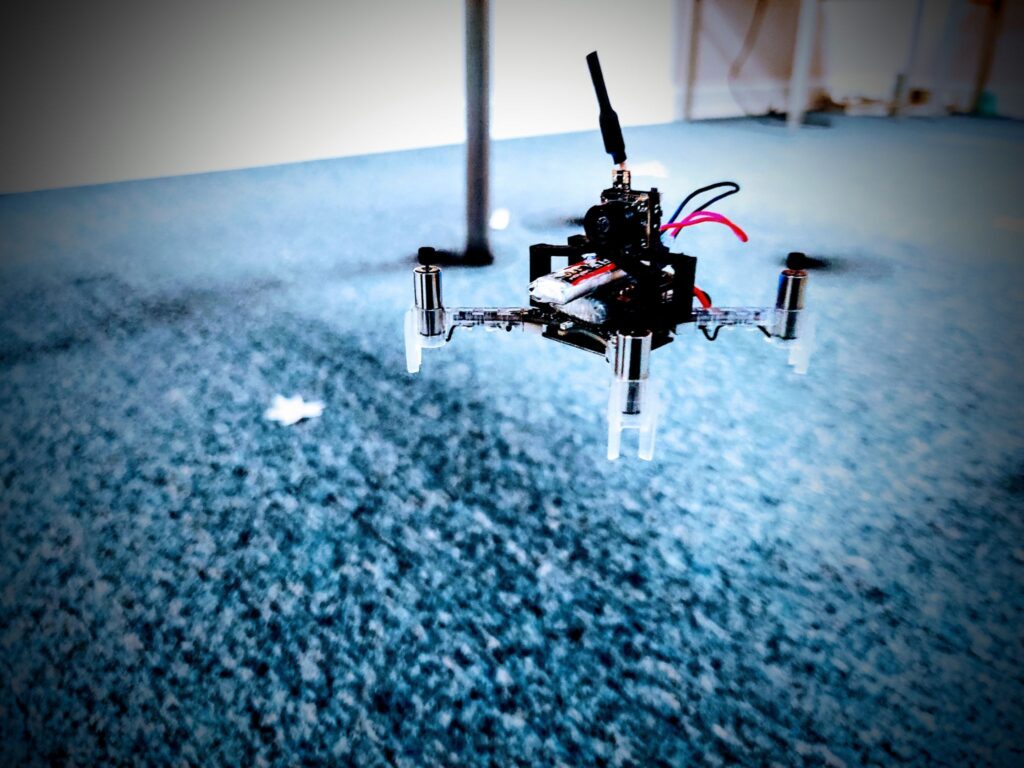
D-MARVEL is a novel, general-purpose UAV autonomy framework providing robust perception, collision avoidance, and human-machine teaming for small UAS missions. Importantly, D-MARVEL’s full capabilities are enabled using only basic inertial sensors and a monocular RGB camera. This is key since it enables the UAV to operate using minimal Low SWaP sensors. Such capability is powered by leveraging both machine learning-based and analytic autonomy components whose interaction provides state-of-the-art sensor enhancement and robust algorithmics. D-MARVEL has been successfully flight tested and executed on COTS quadcopters equipped with Low SWaP embedded GPU devices (such as Nvidia Jetson Xavier board) in laboratory settings.

Open-source Code and RF Datasets

ANDRO is committed to contributing to industry-wide open source data, software, and standards. This section will list open-source code and datasets made available to the community by ANDRO’s Marconi-Rosenblatt AI Lab.

Wi-Fi and Bluetooth Dataset for RF Fingerprinting

REAL-WORLD COMMERCIAL WI-FI AND BLUETOOTH DATASET FOR RF FINGERPRINTING

A real-world radio frequency (RF) fingerprinting dataset for commercial off-the-shelf (COTS) Bluetooth and WiFi emitters under challenging testbed setups is presented in this dataset. The chipsets within the devices (2 laptops and 8 commercial chips) are WiFi-Bluetooth combo transceivers. The emissions are captured with a National Instruments Ettus USRP X300 radio outfitted with a UBX160 daughterboard and a VERT2450 antenna. The receiver is tuned to record a 66.67 MHz bandwidth of the spectrum centered at the 2.414 GHz frequency. This is a first-of-its-kind dataset for fingerprinting WiFi-Bluetooth combo chipsets that are commonly found in today’s IoT era. The dataset is split into two for WiFi and Bluetooth – Day1 and Day2 – each of which is recorded in a different time frame but under the same receiver settings to enable a critical generalization test of the trained deep learning (DL) model. The authors suggest training the DL model with the Day1 dataset with recordings under varied Bluetooth and WiFi signal strengths followed by evaluating the generalization capability of the model with the Day2 dataset which is a challenging and different setup compared to Day1. This evaluation will validate the realistic deployment capability of the trained DL model. The dataset follows the SigMF specifications with certain field extensions to facilitate the fingerprinting application and include additional metadata fields. Each capture is of length 40 Mega Samples (MS) and is associated with a JSON metadata file.

RF-FINGERPRINT-BT-IOT

REAL-WORLD FREQUENCY HOPPING BLUETOOTH DATASET FROM IOT DEVICES FOR RF FINGERPRINTING

A real-world radio frequency (RF) fingerprinting dataset for commercial off-the-shelf (COTS) Bluetooth emitters under challenging testbed setups is presented in this dataset. The dataset includes emissions from 10 COTS IoT emitters (2 laptops and 8 commercial chips) that are captured with a National Instruments Ettus USRP X300 radio outfitted with a UBX160 daughterboard and a VERT2450 antenna. The receiver is tuned to record a 2 MHz bandwidth of the spectrum centered at the 2.414 GHz frequency. This is a first-of-its-kind dataset for fingerprinting Bluetooth emitters under challenging and diverse indoor laboratory setups. The dataset is split into two:  Day1 and Day2 each of which is recorded in a different time frame, location, and testbed setup to enable critical generalization test of the trained deep learning (DL) model. The authors suggest training the DL model with the Day1 dataset which is a simpler setup with recordings under varied Bluetooth signal strengths followed by evaluating the generalization capability of the model with Day2 dataset which is a challenging and vastly different setup compared to Day1. This evaluation will validate the real-world deployment capability of the trained DL model. The dataset follows the SigMF specifications with certain field extensions to facilitate the fingerprinting application and include additional metadata fields. Each capture is of length 40 Mega Samples (MS) and is associated with a JSON metadata file.  

MR-iNET Gym

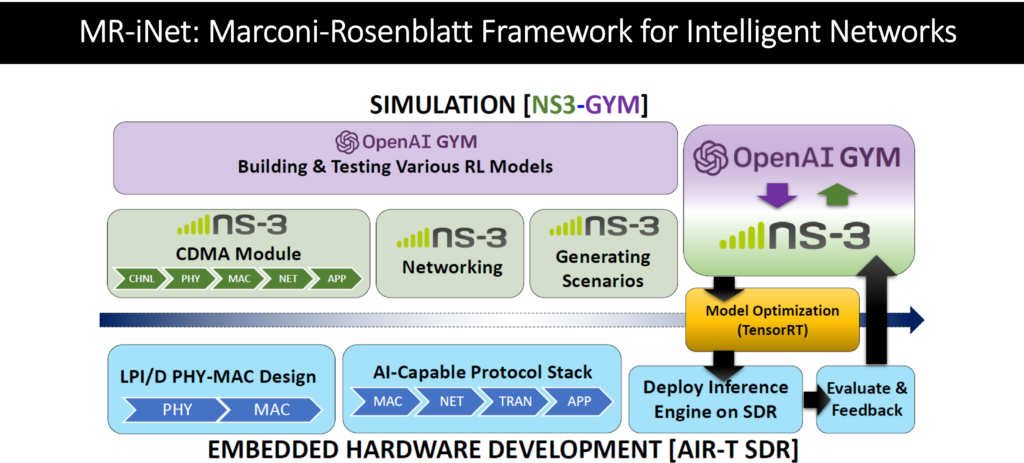
Marconi-Rosenblatt Framework for Intelligent Networks (MR-iNet Gym) For Rapid Design and Implementation of Distributed Multi-agent Reinforcement Learning Solutions for Wireless Networks

The first ns3 module for CDMA packaged to be driven by a reinforcement learning (RL) framework.

RadarCommDataset

RadarCommDataset is a wireless signal dataset released for public use under the Creative Commons Attribution – NonCommercial – ShareAlike 4.0 (CC BY-NC-SA 4.0) License by MR Lab at ANDRO. The lack of existing multitask labelled datasets for machine learning for wireless communication is the prime motivation urging this release. RadarCommDataset is first of its kind multitask labelled dataset released to help research community to advance machine learning for wireless communication. The dataset contains radar and communication waveforms. This repository supplements helper scripts to visualize as well as extract the dataset. Please contact for any other license. Use the following button to go to the RadarCommDataset Github page.

Publications

Research

ANDRO applies fundamental research to develop new technologies as a solution in many application areas. Take a look at a selection of our research publications.